Astrology, Medicine and Hermetism
Ever since ancient times, Hermetism, and especially its astrological part, has been applied to many fields of human endeavour, most significantly medicine. This section investigates what these originally were at their fullest and most elaborate extent. There is no doubt that medicine constitutes the largest part of applied Hermetism and very likely the reason that astrological techniques were kept alive for so many centuries.In the middle ages, especially at the University of Bologna, education consisted of two stages or levels of learning that which was known as the seven liberal arts. The first and lower level was known as the Trivium, which were concerned with The Book of Man, whereby the advanced and upper level was called the Quadrivium, and regarded The Book of Nature.
The trivium, a word coined to imitate the name of the earlier formed quadrivium, set the pace for education by supplying the necessary basic knowledge of grammar, logic, and rhetoric. Once mastered, a student could proceed to the quadrivium to study the advanced subjects mentioned in Plato's Republic as Arithmetic, Music, Geometry and Astronomy/Astrology. These subjects were all of a mathematical nature, with Arithmetic concerning numbers as abstract concepts, Music as numbers in time, Geometry as numbers in space, and Astronomy/Astrology as numbers in space and time.
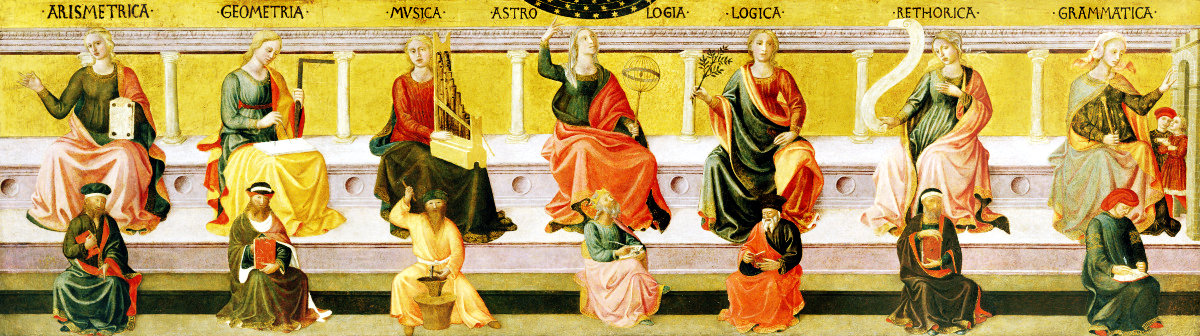 The Seven Liberal Arts
L-R: arithmetic, geometry, music, astrology (in the center), logic, rhetoric, grammar. (c.1450, by Francesco di Stefano Pesellino (1422-1457), "Septem artes liberales").
|
The seven liberal arts correspond to the seven traditional planets, as shown here, together with some inclusions from Robert Zoller's translation of Alkindi’s "On the Stellar Rays": | ||
| Planet | Liberal Art | Robert Zoller's Inclusions |
| Trivium | ||
| Moon | Grammar | Incantation |
| Mercury | Logic | Laws of Nature |
| Venus | Rhetoric | Enchantment |
| Quadrivium | ||
| Sun | Arithmetic | Number Magic & Gematria |
| Mars | Music | Orphic or Davidic Psaltery |
| Jupiter | Geometry | Sigils and Figures |
| Saturn | Astronomy | Astrology and its Images |
As can be seen, medicine was not taught as part of the liberal arts and astrological medicine was a part of astrology, rather than astrology being a part of medicine, as is nowadays claimed.
A brief mention should be made about what happened to the Hermetic sciences and why they are no longer central to human endeavour. Firstly, the modern world which began in the cradle of modern science, was at the time struggling with religious ideas and fought their battle by declaring all mainstream ideas, which were intertwined with Hermetism, to be rooted in magic and superstition, and therefore bad.
Everything was then taken over into modern science by reduction or rationalisation into 'scientific' disciplines, renaming them along the way. As a result, magic became physics and alchemy became chemistry. Because astrological medicine was such a broad subject involving many varied fields, it was converted into biology, botany, diagnostics, surgery, pharmacy, medical theory and research as well as large scale agriculture of medicinal plants.
To make things somewhat clearer, when the term 'magic' is used here, it refers to the intentional manipulation of the physical world by often employing unseen agencies or forces. How this differs from alchemy, is that magic more often than not, goes beyond the boundaries of just physical matter, with the intention of also altering the course of events. Within the framework of medicine, alchemy usually produces medicines to be administered to the patient, whereas magic intends to alter the patient or sickness by supernatural intervention, using particular spells, amulets, incantations and so on. Much of this was developed in the Arab world which inherited its knowledge from the ancient Greeks and Romans and carried its learning into Europe.
What could be more magical or miraculous than a pharmaceutical drug and its invisible actions manifesting effects within and without a patient? The difference in the modern world is the naming of the phenomenon and not the phenomenon itself. The idea and method for modern drugs comes straight out of the »Hermetic Spagyrics of »Paracelsus (explained later) but he doesn't get the credit for being a scientist because he didn't use recent scientifically acceptable language. This is strange indeed but this type of hijacking of ideas is part of modern science.
Naturally enough, it stands to reason, that 'magic' as a Hermetic Science, probably doesn't work in the way it is claimed or described. Nevertheless it is intriguing that Hermetism has been around for thousands of years and as some say, there must be something to it, otherwise it would have disappeared like so many other things from the ancient world. The approach here, is to say what it was, and is, and leave it up to each individual to make personal judgements.
Astrological Medicine
As a Hermetic Science, Astrological Medicine encompasses a number of fields of human endeavour, including iatromathematika, melothesia, spagyric, rhizomatoi and (occult) botany especially in the form of herbalism. These fields of study have since been pushed into the realms of esoterics, occultism or superstition, mainly because their effects are regarded by self-styled authorities, erroneously, as 'beliefs' which don't belong to any recognised religion.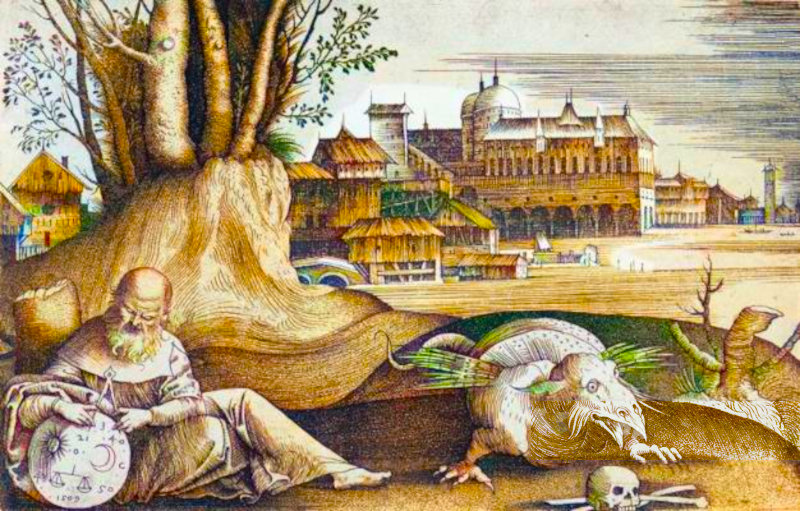 Giulio Campagnola, The Astrologer (l'astrologo), 1590,
Campagnola (1482-1515) was an engraver who invented stippling to create elaborate shading in his works. (this version was artificially colored)
Giulio Campagnola, The Astrologer (l'astrologo), 1590,
Campagnola (1482-1515) was an engraver who invented stippling to create elaborate shading in his works. (this version was artificially colored)
These concepts stem from ancient Gnosticism (literally meaning 'knowing'), which although is not a religion, has always threatened Christianity, at its core, as being its suppressed source of religious ideas. The central theme of Gnosticism is that the world and everything in it is purely evil and it is the duty of an enlightened person to break free from physical existence and ascend to the heavenly realm. Sickness, in this framework, is held to be caused by possession from evil demons, notably of a planetary nature. Nowadays, those demons are 'known' as diseases, and have medical names.
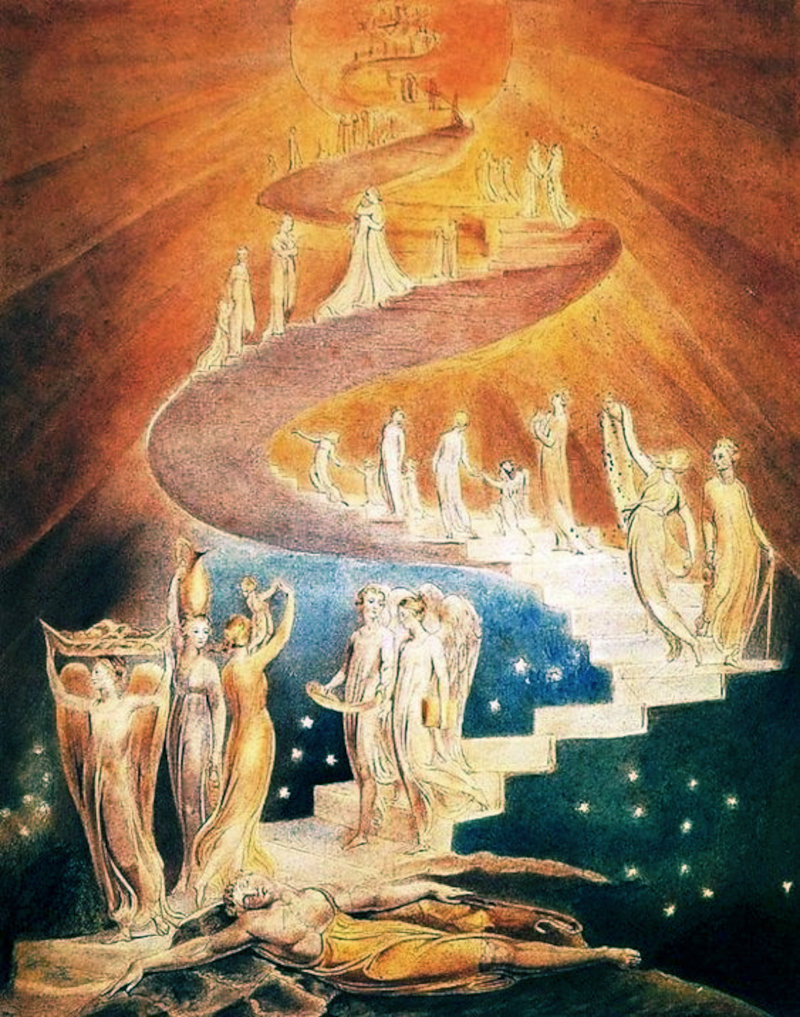 Jacob's Ladder by William Blake portrays the steps to heaven
This idea is very different from that of Hermetic Philosophy which regards the Creation as Divine and Good (an idea which was partially absorbed into Christianity). Rather than blindly accepting one's lot, Hermetism concentrates on improving personal experiences in the current and real world by elevating spirituality towards the Divine in this life and not the next. Regrettably, this idea was shunned by Christianity in favour of encompassing the Gnostic salvation after death.
Unluckily for Hermetism, it was hijacked early in its career by scribes sympathetic to Gnosticism, well before the Common Era (that is, BC or BCE). They wittingly modified the Hermetic texts to align with their own version of Gnosticism, especially that of the world being evil. The result was that some later texts, which are now claimed to be Hermetic, describe an aim of ascending to heaven through the 'planetary spheres', thereby escaping the evil. This was added to both Gnosticism and Hermetism by embracing kabbalistic concepts for an already existing audience.
The following quote about the Hermetic Logos and Nous, from Andre-Jean Festugiere (15.03.1898-13.08.1982), a French Christian friar, historian and philologist, who also translated the Corpus Hermeticum, is an example of how Hermetism can be confused with Gnosticism :
For even in man (the highest of the animals), the rational soul [personal logos} is still bound up with the body and dependent on matter. All the processes of the reason [logos] help one not one whit to make the ascent towards God. "Those who failed to hear the Divine Proclamation," says one of the Hermetic writers, "are those who possess the logos only, but have not received also the nous" that is, the faculty of mystical intuition; . . . "these men know not for what purpose they have been made, and by whom they have been made". The entire spiritual quest therefore will consist in gathering together one's faculties within oneself, in ridding oneself of all images and all thoughts, in living in a state of pure passivity in
which one hopes, in the end, to find God.
("Personal Religion Among The Greeks", p132)
And Elaine Pagels commented on the problem of "gnosis" or "knowing":
[Valentinus] believed, one could progress beyond faith to understanding, that is, to gnosis. This word is often translated into "knowledge", but the translation is somewhat misleading, since gnosis differs from intellectual knowledge (as in phrases like "they know mathematics"), which is characterized in Greek by the word eidein (from which we derive the English word idea).
English is unusual within its language group in having only one verb ("to know") to express different kinds of knowing. Modern European languages use one word to characterize intellectual knowledge and another for the knowledge of personal relationships: French, for example, distinguishes between savoir and connaître, Spanish between saber and conocer, Italian between sapere and conoscere, German between wissen and kennen. The Greek word gignosko, from which gnosis derives, refers to the knowledge of personal relationships (as in "We know Christ" or, in the words of the Delphic oracle, "Know thyself"). The term might better be translated as "insight", or "wisdom".
One Gnostic teacher [Hippolytus in "Refutation of All Heresies"] encourages his students to seek gnosis within themselves:
(from Elaine Pagels, "The Origin of Satan", 1995)
English is unusual within its language group in having only one verb ("to know") to express different kinds of knowing. Modern European languages use one word to characterize intellectual knowledge and another for the knowledge of personal relationships: French, for example, distinguishes between savoir and connaître, Spanish between saber and conocer, Italian between sapere and conoscere, German between wissen and kennen. The Greek word gignosko, from which gnosis derives, refers to the knowledge of personal relationships (as in "We know Christ" or, in the words of the Delphic oracle, "Know thyself"). The term might better be translated as "insight", or "wisdom".
One Gnostic teacher [Hippolytus in "Refutation of All Heresies"] encourages his students to seek gnosis within themselves:
"Abandon the search for God, and creation, and similar things of that kind. Instead, take yourself as the starting place. Ask who it is within you who makes everything his own saying,
“my mind,” “my heart,” “my God.” Learn the sources of love, joy, hate, and desire. . . . If you carefully examine all these things, you will find [God] in yourself".
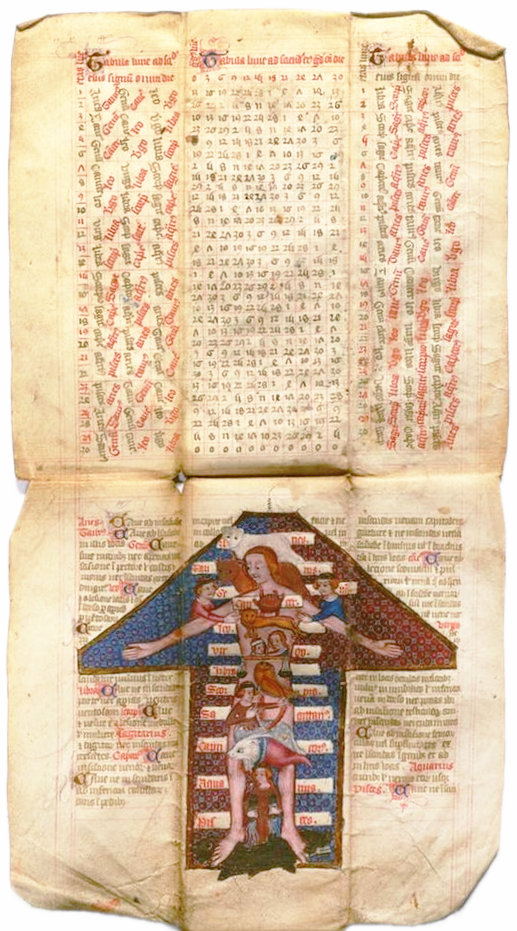 An example of a Bat Book which was used in astrological medicine as a lookup table to inform a doctor of the best time to administer medicine.
Medical Astrologers, The Iatromathematicians
Medical astrologers or Iatromathematika (from Greek ἰατρική , "medical" and μαθηματικά, "mathematics", therefore meaning those who astrologically calculate medical issues), were doctors, physicians or medical practitioners who applied the astrological correspondences to the parts of the human body, called »"Melothesia", to investigate disease and discover remedies. Up until the advent of science, this was mainstream state of the art medicine. In English, Iatromathematika has its earliest usage in 1647, with the publication of Christian Astrology by the astrologer William Lilly. This work contains a lot of material about Medical Astrology, especially within the framework of Hermetic Philosophy.The medical astrologer employed a number of techniques starting with setting up charts for the client's time of birth and the time of the start of the sickness, called the decumbiture, usually when the patient first took to bed. The birth chart indicated the propensity for particular disorders, while the chart of the decumbiture encompassed the characteristics of the current ailments as well as possible treatments. Further charts could be implemented to determine transits, directions and progressions to anticipate the course of an illness.
Within the framework of regular allopathic "Galenic/Hippocratic" medicine inherited from ancient Greece and Rome, much attention was paid to the doctrine of the four humours of the human body. The word humour is a translation of Greek word chymos (χυμός", literally meaning 'juice' or 'sap', metaphorically 'flavor'). It is unclear as to whether Hermetic Medical Astrologers were equally enthusiastic about the idea.
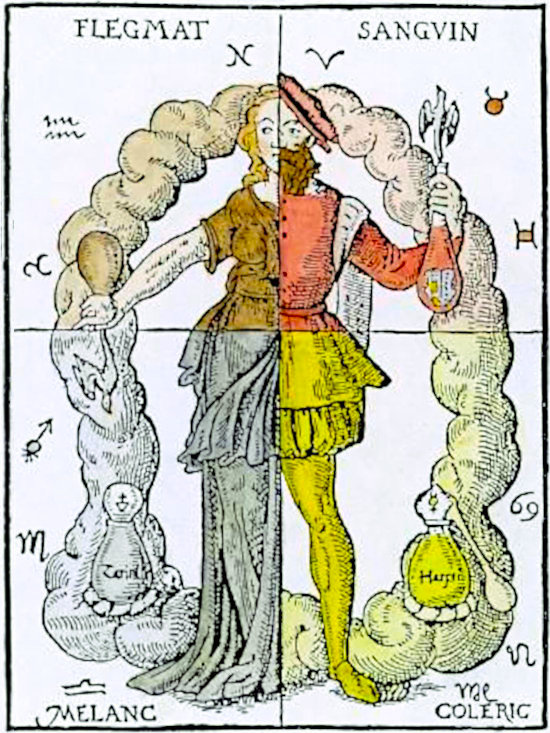 The Four Humours
The doctrine of the four humours led to a corresponding understanding of the four temperaments, also from Hippocrates, which affected human behaviour and personality. These types supposedly related to the outer appearance of a dominant or excessive humour. These in turn, being entrenched in astrology, were allied to the four elements and the four seasons:
| Humour | Temperament | Element | Qualities | Season |
| Phlegm | Phlegmatic | Water | cold & wet | Winter |
| Blood | Sanguine | Air | hot & wet | Spring |
| Yellow Bile | Choleric | Fire | hot & dry | Summer |
| Black Bile | Melancholic | Earth | cold & dry | Autumn |
It was Paracelsus who said in 1538 that:
"All things are poison, and nothing is without poison; the dosage alone makes it so a thing is not a poison."
(Alle Dinge sind Gift, und nichts ist ohne Gift; allein die Dosis macht, dass ein Ding kein Gift ist.).
(Alle Dinge sind Gift, und nichts ist ohne Gift; allein die Dosis macht, dass ein Ding kein Gift ist.).
In Writing
Paracelsus himself, avoided the word astrology in his numerous writings, perhaps to distance his work from the mainstream astrological medicine. Instead, when he wrote about influences from the heavens, he used the term "Astral" and urged Practitioners to know everything about "Astronomey" for timing of events. This is undestandable as he was more of an alchemist than an astrologer. To historians, this has brought about some misunderstanding regarding Hermetic texts which are only considered to be astrological if a chart was drawn and predictions were made. The Paracelsians, as the followers of Paracelsus, continued to publish his works, including translations into other languages such as Dutch, German, French, Latin and English, as well as penning new works attributed to Paracelsus, likely in the same manner as was done with Hermes Trismegistus.
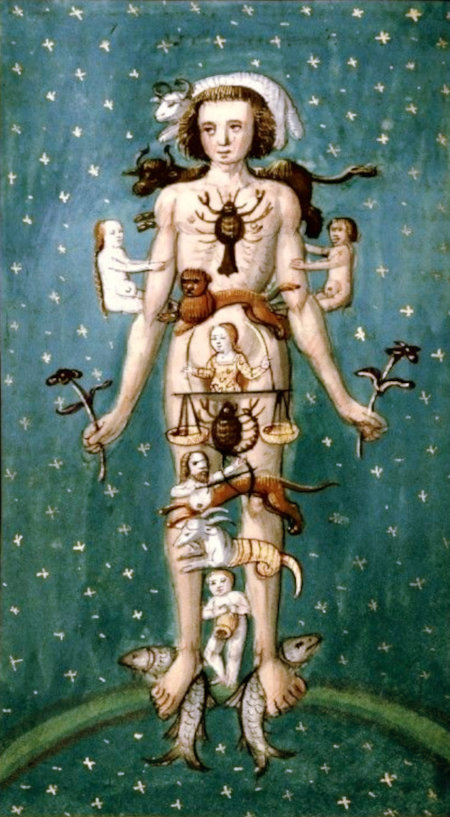
Melothesia
The word "Melothesia" (Greek: μελοθεσία) stems from the ancient assignment of astrological symbolism to the human body. It was extant in Greco-Roman astral science and based on the doctrine of sympathy between the cosmos as macrocosm, mirroring the human as microcosm. Body parts were assigned to zodiacal signs and the internal organs mostly to planets.| Zodiac Sign | Body Region | Body Parts / Organs |
| Aries | head | eyes, nose, ears, mouth, etc. |
| Taurus | neck | throat |
| Gemini | shoulder, armpits, arms | hands, fingers |
| Cancer | chest area | spleen, lungs, ribs |
| Leo | abdominal area | heart, back, sides |
| Virgo | stomach | intestines |
| Libra | navel, loins, buttocks | kidneys |
| Scorpio | pubic region | uterus, penis |
| Sagittarius | hips, thighs | |
| Capricorn | knees | kneecaps |
| Aquarius | calves, shins | |
| Pisces | feet | toes, soles, heels |
| Planet | Corresponding Body-Parts |
| Moon | sense of taste, stomach, abdomen, uterus, left side of the body |
| Mercury | speech and thought, tongue, gall, buttocks |
| Venus | sense of smell, liver, fleshy parts |
| Sun | sight, brain, heart, tendons, right side of the body |
| Mars | left ear, kidneys, veins, genitals |
| Jupiter | sense of touch, lungs, arteries, semen |
| Saturn | right ear, spleen, bladder, mucus, bones |
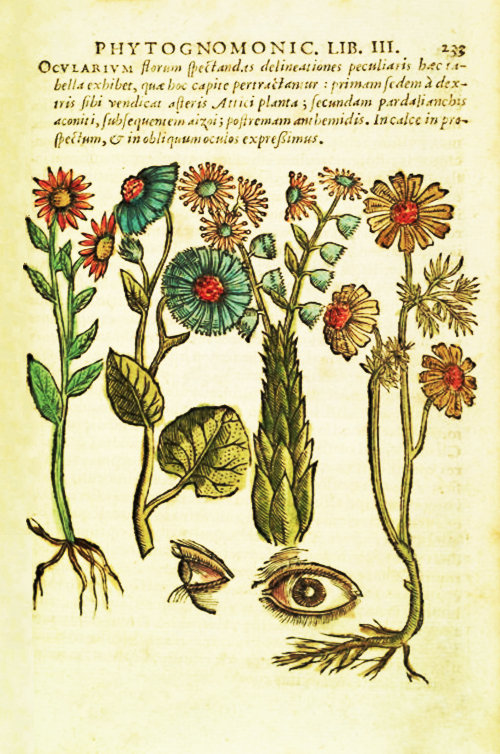
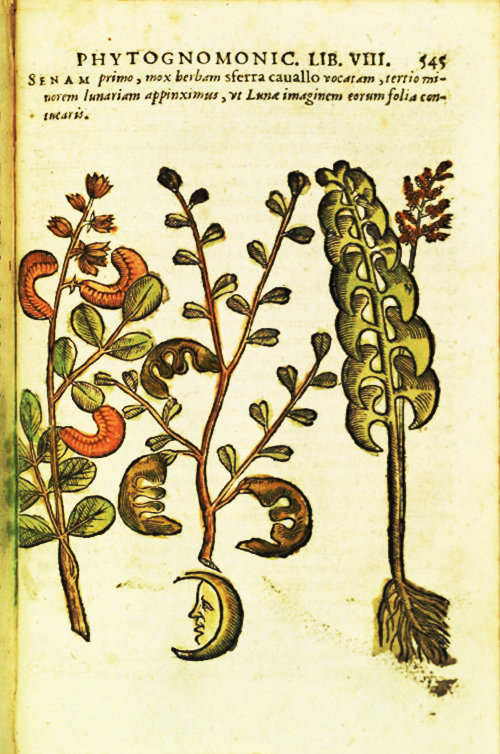
Phytognomonica by Giambattista della Porta (1588)
(scroll to read more)
(scroll to read more)
The Doctrine of Signatures
As an extension of the concept of Melothesia concerning astrological correspondences to the human body, the doctrine of signatures relates things in Nature to each other.Since this begins as a rather personal story, I will start to tell it in the first person.
When I was a young and naive student of astrology, I eagerly read through many lists of books available on the subject in an effort to gain more knowledge. One title in particular piqued my curiosity. It was listed as "Plants and Human Behaviour" and I couldn't wait to discover what the author could tell me about it. I quickly ordered it per post, but upon arrival I was quite puzzled to find out that a typo (typographical error) had crept into the book list. The title which landed on my doorstep was actually called "The Planets and Human Behaviour", by Jeff Mayo, naturally enough, being a book by an astrologer, on astrology.
Many years later I came across what was called The Doctrine of Signatures which, to my surprise picked up where my curiosity had left off. According to this doctrine, plants and humans share a common cosmological ancestor which imprinted a particular character upon them. It also said that plants can affect humans dramatically. Strangely, it also stated that the planets shared in that same cosmological origin.
More recently, it has come to my attention that all of these things have something else in common. They belong to Hermetism and its Cosmology. In there, it is stated that everything in existence was created from the same basic raw matter and upon their coming into being share commonalities. These recognisable similarities form the basis for the signatures, which are to be found within (and 'without') anything.
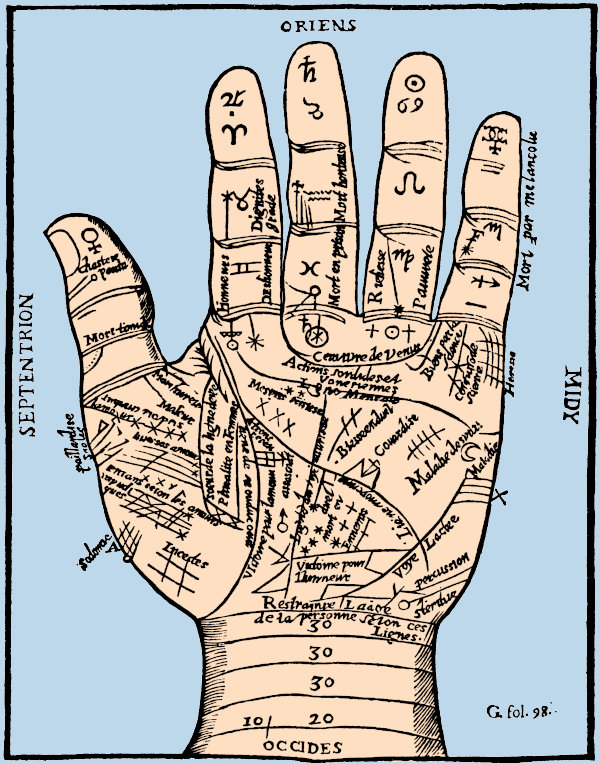 There are also astrological correspondences to the human hand
This is all part of astrological medicine and tells the practitioner how to recognise plant remedies available in the world of nature which can provide a source for treatment. There have been many proponents of this idea, supposedly starting with the fathers of medicine, Dioscorides (c.40–90 CE) and Galen (129–216 CE). It was further widely spread and popularised by the writings of the Swiss physician Paracelsus (1493–1541), the Italian polymath, Giambattista della Porta (1535-1615) and the German philosopher and mystic, Jakob Böhme (1575–1624).
As with most Hermetic ideas, confusion has arisen. One critic complained that Paracelsus said, to discover signatures, all one had to do was to read nature like a book, but he didn't say how to perform the task. This has lead to a surprising array of claims that a plant signature is the same as its shape. Obviously this has tickled the fancies of many advocates and opponents ever since, who then go on to say, that is not only nonsense but dangerous.
As the philosopher, Bertrand Russell (1872-1970) once said:
A stupid man's report of what a clever man says can never be accurate, because he unconsciously translates what he hears into something he can understand.
(from A History of Western Philosophy )
(from A History of Western Philosophy )
Getting back to the doctrine of signatures, one of the most sensible reactions was from the inventor, or should we say, developer of Homeopathy, Samuel Hahnemann (10.04.1755-02.07.1843) who said:
"that which can produce a set of symptoms in a healthy individual, can treat a sick individual
who is manifesting a similar set of symptoms."
This led him to the principle, "like cures like". To this end, Hahnemann sent out his voluntary assistents into the field to try a variety of substances, mostly of plant origin, and report back what sorts of symptoms were produced. This formed the basis of Hahnemann's main remedies.
who is manifesting a similar set of symptoms."
Diagnosis and Prognosis
Medicine is based upon two stages. The first is discovering what is ailing the patient. This entails a diagnosis, looking at physical characteristics and whatever else that will aid in an assessment. The second stage is find an appropriate treatment and what to expect when considering the course of an illness such as the duration, action and outcome. This is known as the prognosis.Not much has changed over the centuries as is revealed by the following excerpt
from the early medieval manuscript Monte Cassino MS. 97 (Latin, Italy):
How you should visit the patient
You should not visit every patient in the same way, but if you listen to all of this, you shall learn. As soon as you approach the patient, ask him if perchance he is in pain. And if he says that he is, ask if the pain is strong or not and persistent or not. Afterwards feel his pulse and see if he has a fever or not. If he is in pain, feel his pulse, which will be fluid and rapid. And ask him if the pain comes when he is cold; also if he is wakeful. And ask if the wakefulness is due to this illness, or to some other activity, and if his bowels and urine are normal. And inspect both parts, and see if there be some danger to him . . . ask about the onset of the illness, and about what the other physicians who visited him said, and whether they all said the same thing or not. And enquire concerning the condition of the body, whether it is cold or the like, whether the bowels are loose, sleep interrupted, and if the disease is persistent, and if he has ever had such ailments before. When you have enquired into all these things, it will be easy for you to discern the causes [facile eius causas agnoscis] and the cure will not seem difficult for you.
from: Faith Wallis - Signs and Senses. Diagnosis and Prognosis in Early Medieval Pulse and Urine Texts,You should not visit every patient in the same way, but if you listen to all of this, you shall learn. As soon as you approach the patient, ask him if perchance he is in pain. And if he says that he is, ask if the pain is strong or not and persistent or not. Afterwards feel his pulse and see if he has a fever or not. If he is in pain, feel his pulse, which will be fluid and rapid. And ask him if the pain comes when he is cold; also if he is wakeful. And ask if the wakefulness is due to this illness, or to some other activity, and if his bowels and urine are normal. And inspect both parts, and see if there be some danger to him . . . ask about the onset of the illness, and about what the other physicians who visited him said, and whether they all said the same thing or not. And enquire concerning the condition of the body, whether it is cold or the like, whether the bowels are loose, sleep interrupted, and if the disease is persistent, and if he has ever had such ailments before. When you have enquired into all these things, it will be easy for you to discern the causes [facile eius causas agnoscis] and the cure will not seem difficult for you.
in The Society for the Social History of Medicine, 2000, pp265-278
Where diagnosis becomes interesting, is by the inclusion of astrological techniques. Charts, signs, planets, aspects, transits and various other data reveal a wealth of information for the practitioner.
As an example, » Dr. Cornell's Encyclopedia of Medical Astrology introduces 3 lengthy sections (10 pages) about Mars:
MARS - The Red Planet, and known as "The God of War". In size Mars is smaller than the Earth. Mars is, perhaps, the most written about Planet in Astrological Literature, and has more to do with human ills than any other planet, and creates more disturbances in human affairs by his afflictions than any other planet. However, Mars has a good and powerful influence also, and along with the Sun is constructive, gives energy, heat, and force to the body, as well as courage and stimulus to the mind. For convenience of reference this Article is arranged in three Sections. Section One, about the General Influences of Mars; Section Two, what Mars Rules, and Section Three, the Diseases and Afflictions of Mars.
Elements and the Matter of the Human Body
According to Hermetic philosophy, everything is made up of the four elements, fire, air, water and earth.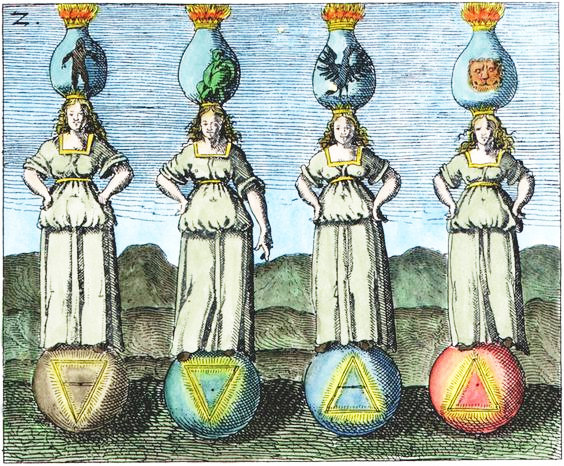
Modern science has "found" that:
The human body is almost completely consists of oxygen, hydrogen, nitrogen and carbon,
whereby these total 96%, by mass and 99%, by number of atoms.
If this is correlated to the four traditional elements:
| traditional element |
chemical element |
by mass in human body |
by atoms in human body |
amount in atmosphere |
| fire | nitrogen | 3% | 1% | 78% |
| air | oxygen | 65% | 24% | 21% |
| water | hydrogen | 10% | 62% | |
| earth | carbon | 18% | 12% | |
| = 96% | = 99% | = 99% |
understanding of the elemental composition of the human body, the microcosm.
Hermetic Medicines Involving Astrology
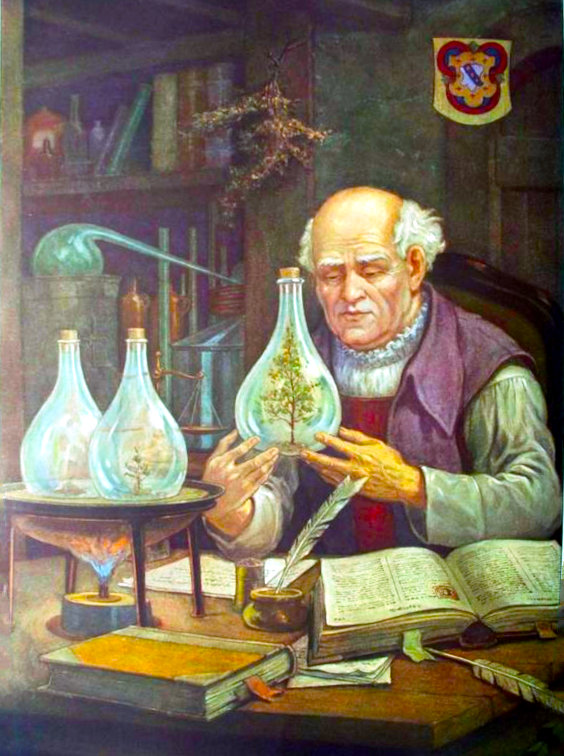 Paracelsus and his Spagyric
Spagyrics
The term Spagyric is taken to be from the Late Latin word, spagyricus from the Ancient Greek verbs, spán (σπᾶν, "to draw" or " to pull") and ageírein (ἀγείρειν, "to assemble"). In our case this means to draw together essential quintessences in a manner that enables the assembly of a medicine. It is often synonymous with alchemic or iatrochemical. Spagyric is in essence the Hermetically alchemical preparation of medicines. It was Paracelsus (c.1493–24.09.1541), who coined the term spagyric and also applied this healing method in practice. Spagyric is firmly entrenched in Hermetism, especially in the way that Paracelsus understood the Hermetic philosophical principles and how he applied them to his technical application.The way that Spagyric works is to reproduce the mechanisms of Universal Generation through the first and second causes. Everything is comprised of matter and spirit and it is the spirit part that is locked up in the matter. Important for Spagyric to work, the spirit part needs to be extracted in such a manner as to ensure that it reaches its maximum virtue. Freeing the spirit from matter requires that it first be exalted, whereby it is matured and ripened, allowing it to evolve through an alchemical process called putrefaction. This acts in a similar manner to a seed breaking down in the ground providing nutrient necessary for germination and new growth.
In Hermetic herbalism or in the mineral kingdom, for this to be successful, it is essential for a practitioner to know the nature of both elemental and astral influences. It is also necessary to know what these influences produce and equally understand what causes could modify those influences. All of this happens within the framework of interaction between macrocosm and microcosm, so that also plays a large part in the overall process. Out of the process of the putrefaction of matter, the spirit is allowed to be purified by freeing it from its earthly prison.
The entire physical side of spagyric is concerned with this separation, or extraction, of the spirit, in order to produce intended quintessences. Since spagyric preparations are in accordance with the mechanisms of Universal Generation, the quintessences produced are readily assimilable by the human organism, thereby being more effective than allopathic medicines. The process is altogether simple, grand and subtle. It is simple in that it follows natural processes, grand as it represents the process of creation and subtle because it defies human comprehension.
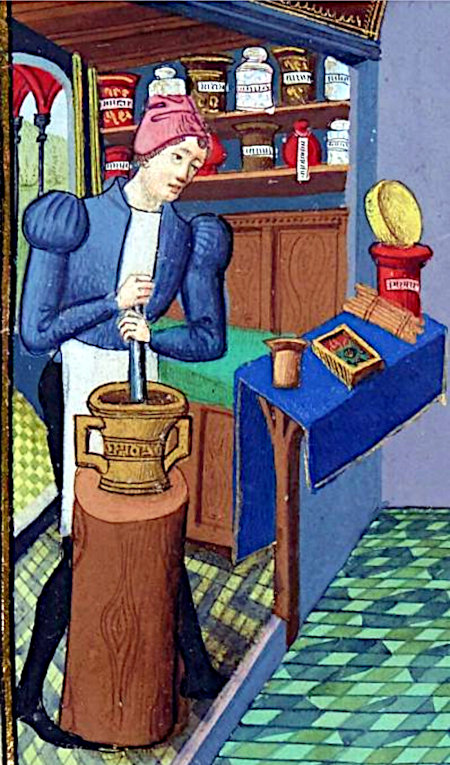 An Antidotary, 1461,
 Bernardi de Gordonio
Rhizomatoi, Herbaria, Taberna, Antidotaria and Unguentaria
The medicinal nature of plants has been known since ancient times. The addition of astrological observations and symbolism into the timing of collection, preparation and administering of herbs and herbal medicines is part of the technical Hermetica, namely Hermetical Astrological Medicine.In ancient times medicines were prepared from plant, mineral and animal sources, yet by far the majority were from plants, having been known since the time of Hippocrates (c.460–c.370 BC). Those used for internal use consisted of the most common remedies such as powders, pills, decoctions, infusions, herbal teas, compound wines, vegetable juices and medicated oils, while those for external use were represented by ointments (unguents), salves (pomades), balms (balsams), waxes and lotions.
The raw materials for these preparations were usually fetched by professionals, in the field, so to speak. Necessarily, these experts needed to know their way around plants and be able to identify those which were sought after as well as knowing which was the best time to pick them according to the most favourable condition. More often than not this was determined astrologically, for instance by the position or phase of the moon. This practice is still maintained, by some, today.
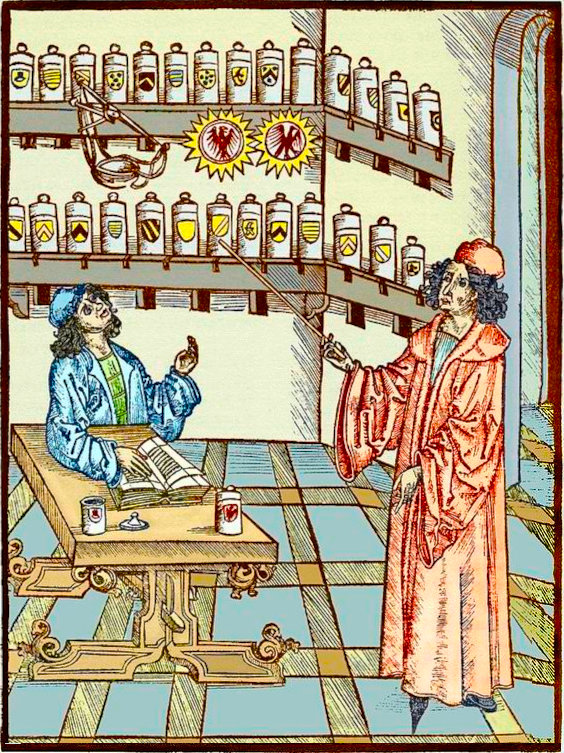 Physician visiting an Apothecary, 1497, in "Buch der Chirurgia",
 by Hieronymus Brunschwig
The Rhizomatoi were specialist "root-gatherers" who were the fore-runners of today's herbalists but with a magical twist. They collected all sorts of plant parts which were regarded as healing substances with the ultimate aim of selling them themselves or supplying apothecaries who could prepare them as drugs to dispense them for later administration. There was a huge resurgence of this art in Italy in the middle ages.
Since the majority of raw materials for the making of medicines came from plants, the term "Plantae Officinalis" was employed to state which particular plants were for medicinal use. The term "Officinalis" in this sense originally referred to the medical plant store of a monastery and was later used as an adjunct to the name of a plant to denote that it was a medicine or food. The term was adopted by Carl Linnaeus (23.05.1707–10.01.1778), for his "Latin Names" (binomial nomenclature) to refer to medical or culinary plants as opposed to "Vulgarus", meaning "common", especially for plants ocurring in the wild.
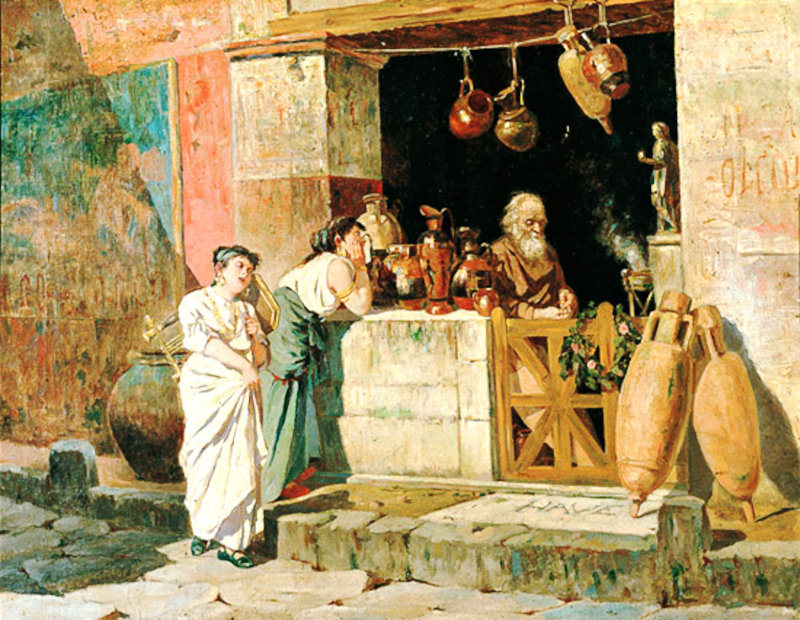 Taberna herbaria (Herb Tavern)
Eventually, these places were all controlled by laws in order to protect the new scientific approach to medicines. The Taberna changed into an apothecary (modern "Apotheke" in German). The herbalist turned into a pharmacist. The root-gatherer became the druggist (the word drug coming from the Middle Low German word droge "trocken", referring to dried roots and herbs).
Magical Hermetic Healing with Azoth, Alkahest and Philosopher's Stone
Many paths of medicine, especially in the middle ages were influenced by Arabic magic and alchemy. As such, the sideline of Alchemical cures were intermingled with miracles and magic. The ultimate aim was often to create a panacea, a cure-all substance which could be used as a pathway to health or immortality. These substances were more often than not, referred to in Alchemy as Universal Solvents. The recipes for preparing these were, naturally enough, top-secret.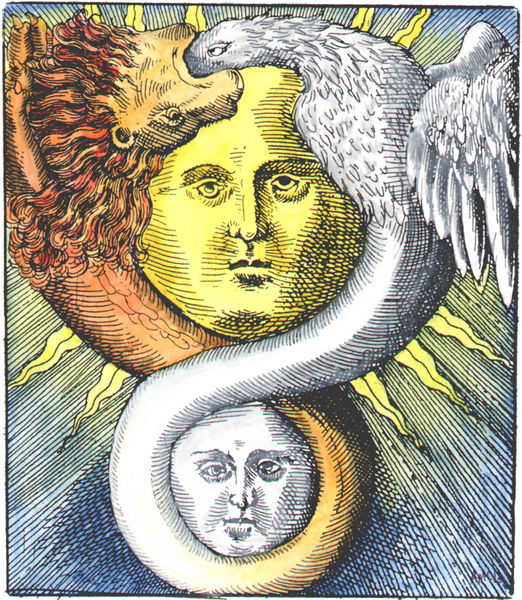 Azoth
Azoth (from Basil Valentine)
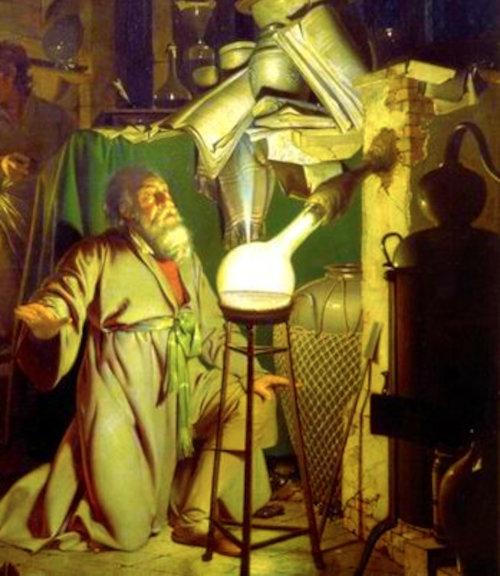 German alchemist Hennig Brand discovered phosphorus while trying to make gold from urine
The Philosopher's Stone is undoubtedly the most famous of the magical substances. It has become the stuff of legends and myths, such as the immortality of the alchemist, Nicholas Flamel, which has since been proven to be untrue. The stone is regarded as having the power to transform lead into gold or mercury into silver, act as a universal elixir bringing about rejuvination or eternal life. Its creation is the most treasured aim of the alchemist.
Azoth
The word azoth can be traced back to the medieval Latin word azoc from the Arabic al-za'buq (الزئبق), meaning 'the mercury.' Azoth was mentioned in many ancient alchemical texts as the animating spirit in all matter. Once extracted, it could be used to gain access to the essence of other substances. Within the context of magic throughout the Renaissance, it was related to spiritual enlightenment, purification of the soul and elevated states of consciousness. This in turn influenced Hermetic and esoteric schools of thought. There is a great likelihood that Paracelsus modelled his philosophical Mercury of the Tria prima on azoth.
Alkahest
Alkahest, a word of uncertain origin, is another of the alchemical recipes for a panacea. Paracelsus had his own recipe for alkahest consisting of alcohol, caustic lime, and carbonate of potash, although the result of the recipe was not intended to be a "universal solvent". Instead he claimed it helped with liver failure by being a substitute for its functions.
Dissolve and Bind
The alchemical maxim from Maria Prophetissa which dates back to antiquity expresses the importance of a solvent:
Dissolve and bind, and you will have mastered the process, obtained the
miraculous masterpiece (Solve et coagula, et habebis magisterium).
miraculous masterpiece (Solve et coagula, et habebis magisterium).
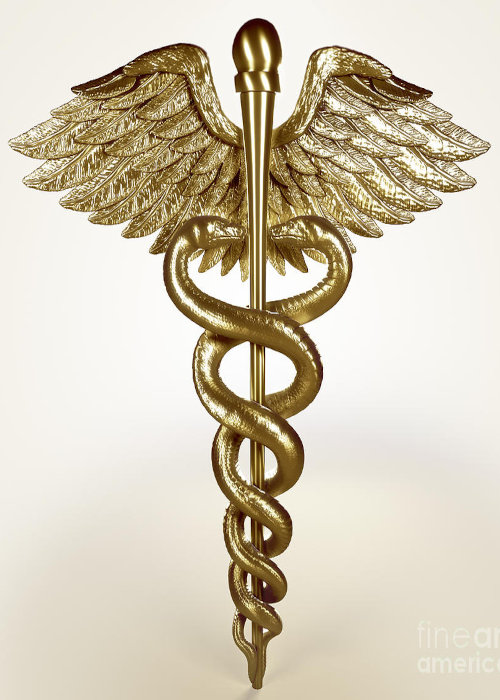 The Cadeceus,
 the winged staff
of Hermes
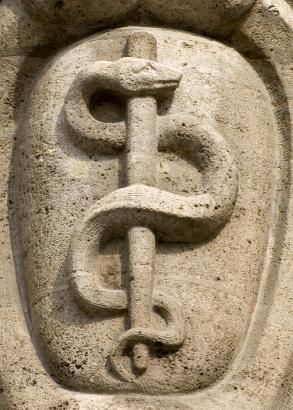 Rod of Asclepius
symbolising medicine
b Mercury
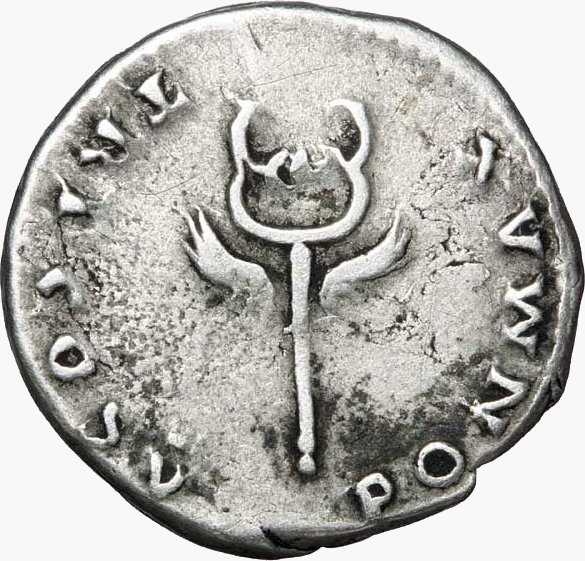
A Roman coin from the year 74 CE depicting a Cadeceus which resembles the sigil for MercuryThe Rod of Asclepius and The Cadeceus
To talk about Hermetic medicine would not be complete without a mention of the Egyptian, Greek and Roman gods. Although similar, there were two gods of medicine, Asclepius and Hermes who carried with them magic wands entwined by snakes, but having different myths and legends surrounding them.Asclepius, the ancient Greek god of healing and medicine, was depicted as holding a staff or rod, which itself came to symbolise healing. Asclepius is also the name of one of the Philosophical Hermetic treatises, as well as being the name of a prominent character in Hermetic dialogues. To make things even more complicated, Hermes Trismegistus is often attributed with being the inventor of Hermetic Medicine.
 In 1902, the U.S. miltary mistakenly assumed that the Cadeceus with two snakes was the symbol of medicine, while it should have been the Rod of Asclepius with only one snake
The Cadeceus was the original symbol for Mercury and the modern astrological sigil is based upon it. According to legend, the Cadeceus, had magical powers. "The wand of Mercury was endowed with such virtues that whoever it touched, if asleep, would start up into life and alacrity, and, if awake, would immediately fall into a profound sleep. When it touched the dying, their souls gently parted from their mortal frame ; and, when it was applied to the dead, the dead returned to life." (William Godwin, "Lives of the Necromancers" 1876, p37).
Important Astrological Techniques
The Chart of the Decumbiture
In astrology a decumbiture chart is an inception chart that is cast for the moment that a person lays down or takes to their bed as a result of becoming ill. The decumbiture chart is essentially an inception or commencement chart for the illness itself, and it is used in medical astrology in order to determine information about the nature and course of the illness.The practice is apparently very old, dating back to the early Hellenistic tradition. It was especially used in late Medieval and Renaissance Europe when most doctors were trained in astrology, in order to help diagnose and treat patients.
The term is derived from the Latin "dēcumbo" or "decumbere", meaning "to lie down" or "to fall down". The use of this term by Latin authors was probably in imitation of the use of the word kataklisis (κατάκλισης) to refer to the same concept in Greek astrological texts. Kataklisis also means "to lie down" or "take to one’s bed".
Here are some aphorisms by Andrea Argoli regarding the decumbiture,
from De diebus criticis et aegrorum decubitu libri duo, 1651-1652.
Translation from Latin by Margherita Fiorello, revised by Lucia Bellizia
(with a little more help from the current author, Rod Schneider)
On the other hand, sometimes diseases have their root in some transit rather than in the return, and at a different moment from the return of the Sun to the place where it was at the birth time, and that moment will be the moment of decumbiture, about which we will talk more in the following book. In the decumbiture, or beginning of disease, always one of the Lights or the Ascendant or the Ascendant's ruler, is corrupted in some way from malefics and especially the Moon. The Ancients left to posterity many aphorisms, according to disease, by nature and quality of the illness, and out of them, we will present some.
If the Sun in the hour of decumbiture is in the place of the Saturn in the radix, or in the place of Saturn's opposition, or square, or commanding or obeying antiscia, or in whatever else way afflicted by Saturn by ray or body, it gives to the native, illness deriving by an excess of cold humours, melancholy, Saturnian in nature, deriving from the causes we mentioned in a dedicated chapter.
If the Sun is afflicted by Mars, illness will derive from by bilious humour, from the dry and muddy blood, according to the nature of Mars.
If Jupiter is ill disposed, Ascendant ruler or Lord of the year, afflicted by malefics and placed in the 6th house, illness will be derived from the excess of blood and purulent humour and from inflammation, from liver afflictions and others of Jupiterian nature.
If Venus is afflicted, illness will derive from a venereal cause, from repletion things or, and similar things.
If Mercury is corrupted diseases from brain ailments, epilepsy, coughing and Mercurian diseases.
An afflicted Moon brings diseases of the same nature, sleepiness, weariness and things like that.
Saturn with the Sun in Aries, Leo, Sagittarius, dry and hot signs, illness with continuous fever. In the watery Cancer, Scorpio, Pisces, diseases deriving from cold and moist matter, fluxions, articular pains, and similar diseases.
In the earthy Taurus, Virgo, Capricorn, diseases caused by melancholy, quartan (a kind of fever recurring every 4 days) and chronic diseases.
In fixed signs, Taurus, Leo, Aquarius, persisting, creeping fevers, and in the same way quartan, and in addition to fevers, leprosy, articular diseases, gout, podagra, sciatica.
Saturn in movable signs, Aries, Cancer, Libra, Capricorn signifies humours, fluxions, weakening genitals.
In the common signs, Gemini, Virgo, Sagittarius, Pisces, it brings composite pains, change in illnesses, and makes them longer.
If Saturn is with the Moon's nodes, the Dragon Head or Tail, or with a combust Venus, or violent stars (Argoli mentioned earlier, as violent stars are Antares, Aldebaran, Hercules (Pollux, beta Gemini), Bellatrix, South Scale, Algol, Regulus) or in Leo signifies pernicious or pestilent fevers.
Mars in fiery signs afflicting Lights (Sun or Moon), the Ascendant or its rulers, threatens pestilential or burning fevers or something like that: if Saturn is joined, melancholic and atrabiliary too.
If Mars is in the 6th, or in the 12th, it grants burning, intense and pernicious fevers, especially in fiery signs, Aries, Leo, Sagittarius.
In movable signs, acute fevers, ending shortly, generally in bad way.
In common signs, acute, double, sudden fevers, usually recidivous.
Generally Saturn grants long ones, Mars short: if Mars is with the Sun sanguine ones, or continuous fevers accompanied with putrefaction.
Jupiter in fiery signs produces sanguine fevers with putrefaction, Venus in fiery signs, fevers lasting a day, while with Mars putrid fevers deriving from pus. Mercury in fiery signs composite fevers, and in the same way the Moon catarrhal, putrid ones.
Moon in opposition to Mars in the same fiery signs poisonous, pestilential fevers, and malicious, but of short duration,
With Mars in airy signs, Gemini, Libra, Aquarius - especially in Gemini - gives dangers from sword too, and similar weapons.
Moon in Aries in the 8th house gives hot diseases to the head.
Planets in water signs signify putrid fevers, especially if they are combust (very near the Sun); in earthy signs in fact they don't give putrefaction.
Planets in signs of short ascension - Capricorn, Aquarius, Pisces, Aries, Taurus, Gemini signify short diseases; in signs of long ascension - Cancer, Leo, Virgo, Libra, Scorpio, Sagittarius- long and chronic. Malicious fevers are signified by an afflicted Sun, and Leo is rising.
With the help of experience, it is not of little importance in illness diagnosis the examination of the 6th house and its dispositor: if, in fact, in this house there is a fiery sign, the illness will be dry or choleric, if a earth sign, a melancholic disease, if an airy sign sanguine, if watery a rheumy one; in the same way it will be possible conjecturing about the illness according the planet which is in the 6th house or ruling it.
In the same way, from the sign where the Ruler of the Ascendant is, we can deduce which part is attacked by the illness, according to the signs' rulership on the body limbs. If in Aries, it will be a head disease, if in Gemini in arms, and the limbs ruled by Gemini, in the same way, we will judge about the remaining signs, according to their rulership on the human body.
If the Sun in the hour of decumbiture is in the place of the Saturn in the radix, or in the place of Saturn's opposition, or square, or commanding or obeying antiscia, or in whatever else way afflicted by Saturn by ray or body, it gives to the native, illness deriving by an excess of cold humours, melancholy, Saturnian in nature, deriving from the causes we mentioned in a dedicated chapter.
If the Sun is afflicted by Mars, illness will derive from by bilious humour, from the dry and muddy blood, according to the nature of Mars.
If Jupiter is ill disposed, Ascendant ruler or Lord of the year, afflicted by malefics and placed in the 6th house, illness will be derived from the excess of blood and purulent humour and from inflammation, from liver afflictions and others of Jupiterian nature.
If Venus is afflicted, illness will derive from a venereal cause, from repletion things or, and similar things.
If Mercury is corrupted diseases from brain ailments, epilepsy, coughing and Mercurian diseases.
An afflicted Moon brings diseases of the same nature, sleepiness, weariness and things like that.
Saturn with the Sun in Aries, Leo, Sagittarius, dry and hot signs, illness with continuous fever. In the watery Cancer, Scorpio, Pisces, diseases deriving from cold and moist matter, fluxions, articular pains, and similar diseases.
In the earthy Taurus, Virgo, Capricorn, diseases caused by melancholy, quartan (a kind of fever recurring every 4 days) and chronic diseases.
In fixed signs, Taurus, Leo, Aquarius, persisting, creeping fevers, and in the same way quartan, and in addition to fevers, leprosy, articular diseases, gout, podagra, sciatica.
Saturn in movable signs, Aries, Cancer, Libra, Capricorn signifies humours, fluxions, weakening genitals.
In the common signs, Gemini, Virgo, Sagittarius, Pisces, it brings composite pains, change in illnesses, and makes them longer.
If Saturn is with the Moon's nodes, the Dragon Head or Tail, or with a combust Venus, or violent stars (Argoli mentioned earlier, as violent stars are Antares, Aldebaran, Hercules (Pollux, beta Gemini), Bellatrix, South Scale, Algol, Regulus) or in Leo signifies pernicious or pestilent fevers.
Mars in fiery signs afflicting Lights (Sun or Moon), the Ascendant or its rulers, threatens pestilential or burning fevers or something like that: if Saturn is joined, melancholic and atrabiliary too.
If Mars is in the 6th, or in the 12th, it grants burning, intense and pernicious fevers, especially in fiery signs, Aries, Leo, Sagittarius.
In movable signs, acute fevers, ending shortly, generally in bad way.
In common signs, acute, double, sudden fevers, usually recidivous.
Generally Saturn grants long ones, Mars short: if Mars is with the Sun sanguine ones, or continuous fevers accompanied with putrefaction.
Jupiter in fiery signs produces sanguine fevers with putrefaction, Venus in fiery signs, fevers lasting a day, while with Mars putrid fevers deriving from pus. Mercury in fiery signs composite fevers, and in the same way the Moon catarrhal, putrid ones.
Moon in opposition to Mars in the same fiery signs poisonous, pestilential fevers, and malicious, but of short duration,
With Mars in airy signs, Gemini, Libra, Aquarius - especially in Gemini - gives dangers from sword too, and similar weapons.
Moon in Aries in the 8th house gives hot diseases to the head.
Planets in water signs signify putrid fevers, especially if they are combust (very near the Sun); in earthy signs in fact they don't give putrefaction.
Planets in signs of short ascension - Capricorn, Aquarius, Pisces, Aries, Taurus, Gemini signify short diseases; in signs of long ascension - Cancer, Leo, Virgo, Libra, Scorpio, Sagittarius- long and chronic. Malicious fevers are signified by an afflicted Sun, and Leo is rising.
With the help of experience, it is not of little importance in illness diagnosis the examination of the 6th house and its dispositor: if, in fact, in this house there is a fiery sign, the illness will be dry or choleric, if a earth sign, a melancholic disease, if an airy sign sanguine, if watery a rheumy one; in the same way it will be possible conjecturing about the illness according the planet which is in the 6th house or ruling it.
In the same way, from the sign where the Ruler of the Ascendant is, we can deduce which part is attacked by the illness, according to the signs' rulership on the body limbs. If in Aries, it will be a head disease, if in Gemini in arms, and the limbs ruled by Gemini, in the same way, we will judge about the remaining signs, according to their rulership on the human body.
Planetary Rulers of the Signs
Each of the twelve signs is associated with a ruling planet, known appropriately as its ruler. Once again this is not arbitrary and the ancients thought out a scheme of allocation. Since the Sun and Moon, known together as the luminaries or the lights, are extremely important in any chart the rulerships start with them. The sign with most affinity to the Sun is Leo and that for the Moon is Cancer. This effectively divides the signs into two groups sometimes referred to as the solar and lunar sections. Around the circle the polarities change from positive (outgoing, expressive) to negative (receptive, creative).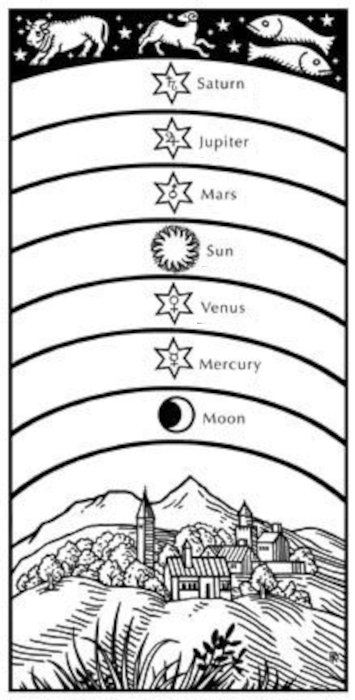
Chaldean Planetary Order
Counting around the circle in the natural order of the signs and in Chaldean planetary order we get
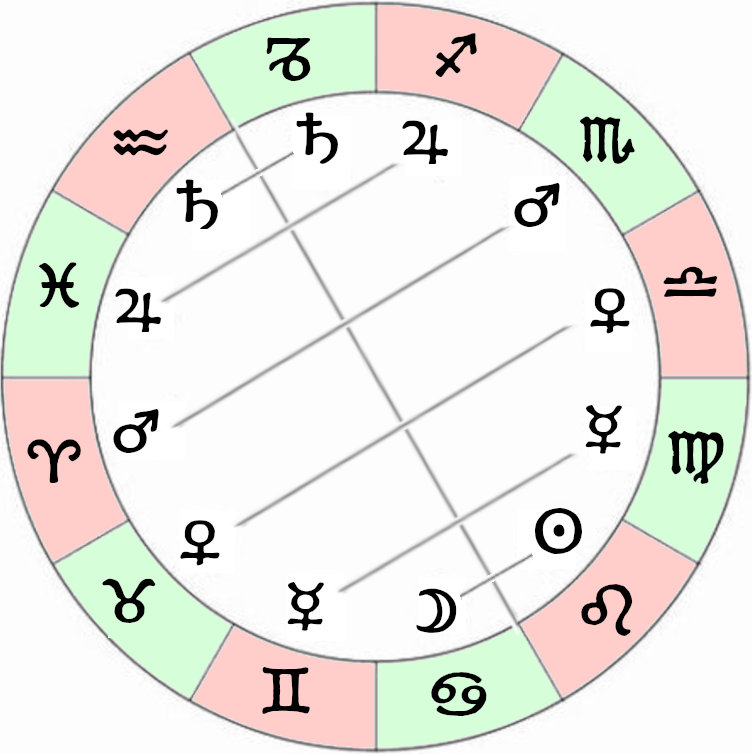
Zodiacal Signs with Ruling Planets
Polarity: pink = +ve, green = -ve
E Leo ruled by d Sun (+ve),
F Virgo ruled by b Mercury (-ve),
G Libra ruled by c Venus (+ve),
H Scorpio ruled by e Mars (-ve)
I Sagittarius ruled by f Jupiter (+ve),
J Capricorn ruled by g Saturn (-ve).
and in the other direction
D Cancer ruled by a Moon (-ve),
C Gemini ruled by b Mercury (+ve)
B Taurus ruled by c Venus (-ve),
A Aries ruled by e Mars (+ve),
L Pisces ruled by f Jupiter (-ve),
K Aquarius ruled by g Saturn (+ve).
F Virgo ruled by b Mercury (-ve),
G Libra ruled by c Venus (+ve),
H Scorpio ruled by e Mars (-ve)
I Sagittarius ruled by f Jupiter (+ve),
J Capricorn ruled by g Saturn (-ve).
and in the other direction
D Cancer ruled by a Moon (-ve),
C Gemini ruled by b Mercury (+ve)
B Taurus ruled by c Venus (-ve),
A Aries ruled by e Mars (+ve),
L Pisces ruled by f Jupiter (-ve),
K Aquarius ruled by g Saturn (+ve).
Planetary Rulers of the Weekdays

The Days of the Week
and Their Rulers
Whether or not it was the earliest, a seven day week was decreed by King Sargon I of Akkad, sometime around 2300 BCE. Sargon managed to form the very first known empire in Mesopotamia, known as the Akkadian Empire, uniting Sumerian and Akkadian speaking peoples.
The ancient mathematicians who observed the celestial objects for their timekeeping were also aware of the fact that a lunation takes 28 days and that four weeks of seven days each fit neatly into the scheme of things. Those four weeks align nicely with the four well known phases of the Moon, namly new, first quarter, full and last quarter.
Planetary Hours
When the rulers of the weekdays were allocated, something else was noticed by the ancients. When considering planetary hours, the daytime from sunrise to sunset is divided into twelve equal segments. The night time from sunset to the next sunrise. is also divided by twelve. When the daylight is longer than the darkness, the day hours will be longer than regular clock hours, the night hours being shorter,The day begins at sunrise, as was the case in ancient times and still is for some modern time keeping, a day's ruling planet is also allocated to the first hour of the new day. The subsequent 24 hours are then ruled by the planets in a reversed Chaldean Order, from Saturn to Moon. The 25th hour just happens to be the same planet as the ruler of the next day.
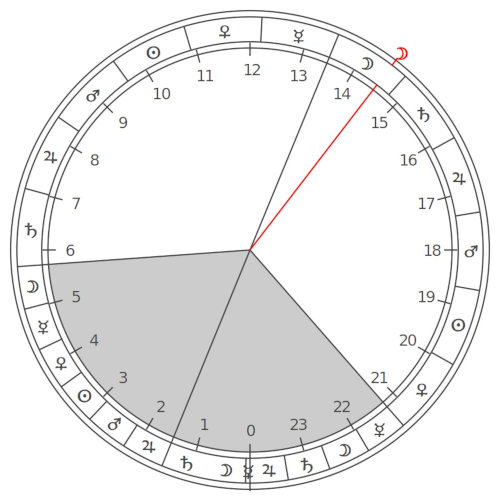
An Example of a Clock
Showing Planetary Hours.
from Sunrise to Sunset, Saturday, 12 day-hours
01 02 03 04 05 06 07 08 09 10 11 12
g f e d c b a g f e d c
from Sunset to Sunrise, Saturday, 12 night-hours, then the next day
13 14 15 16 17 18 19 20 21 22 23 24 ...01
b a g f e d c b a g f e ..d
01 02 03 04 05 06 07 08 09 10 11 12
g f e d c b a g f e d c
from Sunset to Sunrise, Saturday, 12 night-hours, then the next day
13 14 15 16 17 18 19 20 21 22 23 24 ...01
b a g f e d c b a g f e ..d
In the example of a planetary hour clock shown on the left, the grey area represents night time, the white part day time. The black line running through the middle of day and night runs from the Nadir, lowest point of the sun, at mid-night, to the Zenith, the highest point of the Sun, at mid-day. The red line is like a clock hand which says that the current hour is ruled by the Moon.
This particular clock starts at the lowest point marked as 0 for midnight. The upper left edge of the grey area shows the end of the previous night and therefore the sunrise of the current day, just before 6 o'clock, with Saturn ruling the first hour, so it is a Saturday. The day continues until the last planetary hour, ruled by Venus, up to just past 9 o'oclock in the evening. The clock display ends at the 0, for midnight of this particular day.
Some Prominent Figures
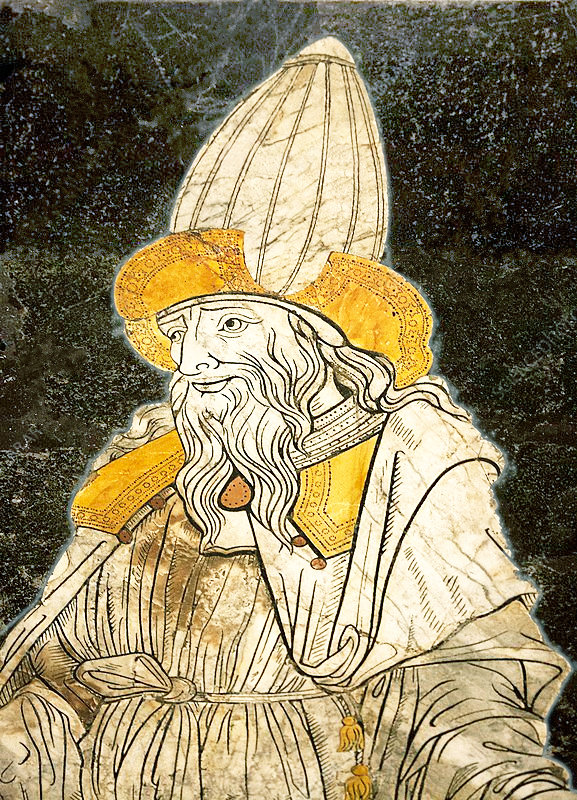 Hermes Trismegistus as depicted on the marble floor of the Siena Cathedral.
Hermes Trismegistus
Most importantly for our story is undoubtedly Hermes Trismegistus, an amalgam of the Egyptian God Thoth, and the Greek God Hermes known in Ancient Greek as "Hermē̂s ho Trismégistos" (Greek: Ἑρμῆς ὁ Τρισμέγιστος), "Hermes, the Thrice Greatest". According to legend, he was the inventor of Astrology, Alchemy and Magic and authored many books on those subjects. He was also a significant figure in the Arab Islamic world which had conquered the Alexandrian Empire and acquired all its assets.The oldest recorded mention of Hermes Trismegistus was by the Egyptian Priest, Manetho (lived between c.285 and c.222 BCE) when he wrote to King Ptolomaios II:
Inscriptions from the land of Seir, originating from Thoth, the first Hermes, with hieroglyphs in the sacred language, translated into the Greek language after the flood and recorded in books by the son of Agathodaemon, the second Hermes, the father of Tat, in the shrines of the temple of Egypt.
He is mentioned in Islamic Medical Manuscripts at the National Library of Medicine:
Hermes Trismegistus
الهرميس الهرمس
Hermes Trismegistus was both the Hellenistic Greek name for the ancient Egyptian god Thoth and the name of an authority of late Antiquity on philosophical and magical subjects. In the Islamic world he was known as Hirmīs or Harmas or Harmis or Hurmus. In Arabic treatises he is frequently cited as an authority in alchemy, astrology, and especially magic.
The Library of Congress has an Arabic manuscript purportedly by Hermes Trismegistus:
الهرميس الهرمس
Hermes Trismegistus was both the Hellenistic Greek name for the ancient Egyptian god Thoth and the name of an authority of late Antiquity on philosophical and magical subjects. In the Islamic world he was known as Hirmīs or Harmas or Harmis or Hurmus. In Arabic treatises he is frequently cited as an authority in alchemy, astrology, and especially magic.
 The Book of Hermes The Wise
The Book of Hermes the Wise
is a text on invocations, magical incantations, and medicinal draughts used for the treatment of maladies. The purported author, Hermes Trismegistus
(Thrice-great Hermes), was a legendary figure in the classical Greek, Roman, and Islamic worlds, to whom a large corpus of writing was attributed.
The book is organized according to the Arabic letters arranged in the abjad system. The discussion for each letter begins with a diagnosis of an adult male who is the companion of the letter, and proceeds to a prescribed therapy involving incantations (occasionally of religious texts such as the throne verse of the Qur'an), as well as botanical preparations and other medicinal compounds.
The text then proceeds to discuss the case of a boy, an adult female, and a girl described in a similarly esoteric fashion as the companion of the letter in question, while prescribing the appropriate therapy for each. The mythology of Hermes Trismegistus took various forms. An early Islamic account is that of Abu Sahl al-Fadl ibn Nawbakht (died circa 815), astrologer to several of the early Abbasid caliphs.
Abu Sahl is quoted by later authors as identifying Hermes as a resident of Babylon, driven away to Egypt at the fall of the Persian Empire to Alexander. Such an account would have served well to place the origin of Hermes' astrology in the territory of the Persian Empire, and thus within the purview of Abu Sahl-an astrologer of Persian heritage working at the caliphal court in Baghdad.
Modern researchers point out the varied nature of the individual works in the vast Hermetic corpus in the Islamic world, written at different times, with different purposes and aims, united only in their claims of authorship in reference to the legendary Hermes. This manuscript, in naskh script and black ink with frequent scribal errors, is dated to 830 AH (1426-27 AD), although the scholar A.Z. Iskander identifies the manuscript as a 20th century copy of an earlier manuscript.
The book is organized according to the Arabic letters arranged in the abjad system. The discussion for each letter begins with a diagnosis of an adult male who is the companion of the letter, and proceeds to a prescribed therapy involving incantations (occasionally of religious texts such as the throne verse of the Qur'an), as well as botanical preparations and other medicinal compounds.
The text then proceeds to discuss the case of a boy, an adult female, and a girl described in a similarly esoteric fashion as the companion of the letter in question, while prescribing the appropriate therapy for each. The mythology of Hermes Trismegistus took various forms. An early Islamic account is that of Abu Sahl al-Fadl ibn Nawbakht (died circa 815), astrologer to several of the early Abbasid caliphs.
Abu Sahl is quoted by later authors as identifying Hermes as a resident of Babylon, driven away to Egypt at the fall of the Persian Empire to Alexander. Such an account would have served well to place the origin of Hermes' astrology in the territory of the Persian Empire, and thus within the purview of Abu Sahl-an astrologer of Persian heritage working at the caliphal court in Baghdad.
Modern researchers point out the varied nature of the individual works in the vast Hermetic corpus in the Islamic world, written at different times, with different purposes and aims, united only in their claims of authorship in reference to the legendary Hermes. This manuscript, in naskh script and black ink with frequent scribal errors, is dated to 830 AH (1426-27 AD), although the scholar A.Z. Iskander identifies the manuscript as a 20th century copy of an earlier manuscript.
The Arab World
Mashallah ibn Athari (c. 740 – 815) Persian Jewish astrologerAbu Ali al-Khayyat / Albohali (c. 770 – c. 835) Arab astrologer, student of Mashallah ibn Athari
Abu Ma'shar al-Balkhi (10.08.787 – 09.03.886) Persian Muslim Astrologer
Al-Khwarizmi (c. 780 – c. 850) Persian
Al-Biruni (973 – after 1050) Persian
Haly Abenragel (10th c.- after 1037) court astrologer to the Tunisian prince al-Mu'izz ibn Bâdis
Abraham ibn Ezra (1089/1092 – 27.01.1164/23.01.1167) Jewish astrologer
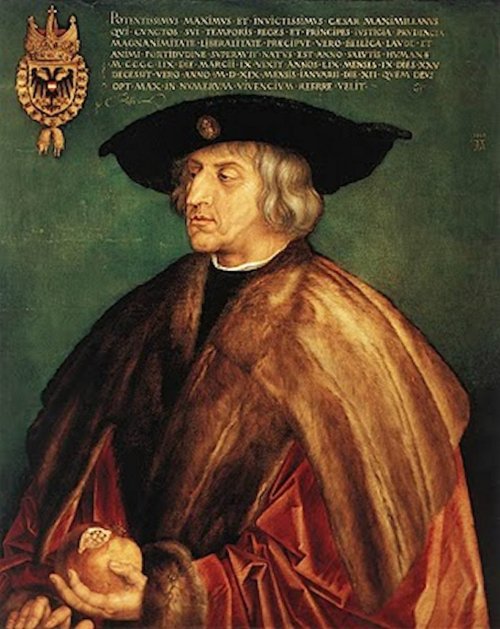 Michael Scot
Michael Scot
The Scottish astrologer, Michael Scot, Latin: Michael Scotus (1175 – c. 1232) was court astrologer to the Holy Roman Emperor Frederick II, mathematician, alchemist, scholar and reputedly, magician. He was not only the stuff of legends, he was mostly considered in his day to be the greatest public intellectual. Well versed in Latin, Greek, Arabic and Hebrew, he translated many works, including Aristotle and Averroes, for his patron, the Emperor.Scot once said:
"Every astrologer is worthy of praise and honour," Scot wrote, "since by such a doctrine as astrology he probably knows many secrets of God, and things which few know."
The mathematician, Leonardo Fibonacci (c. 1170 – c. 1240–50) wrote to Scot;
You have written to me, my Lord Michael Scotus, supreme philosopher, that I should transcribe for you the book on numbers which I composed some time since. Wherefore, acceding to your demand and going over it carefully, I have revised it in your honor and for the use of many others. In this revision I have added some necessary matters and cut some superfluidities. In it I have given the complete doctrine of numbers according to the method of the Hindus, which method I have chosen as superior to others in this science.
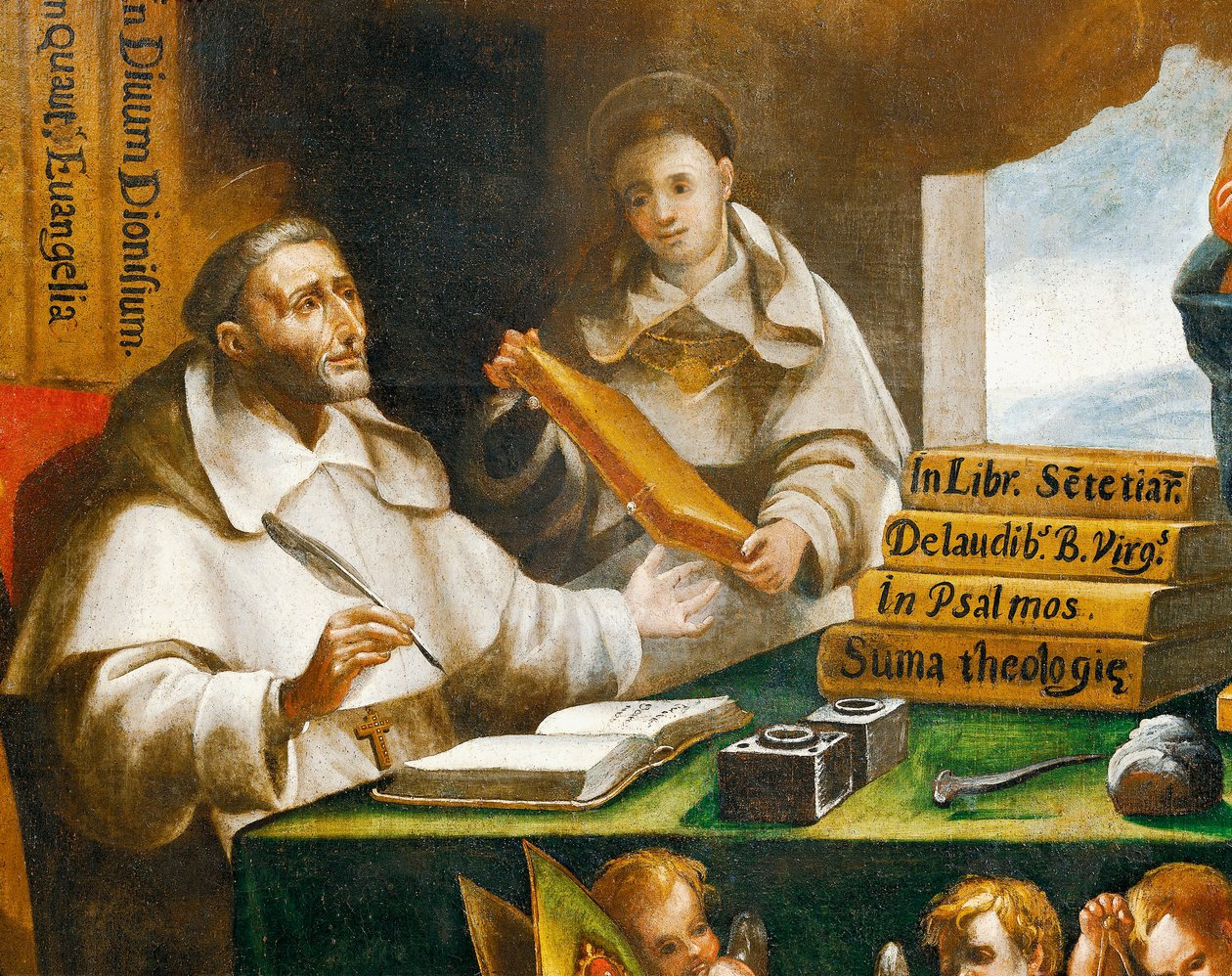 Albertus Magnus (Albert the Great)
Albertus Magnus
Albert the Great (c.1193-15.11.1280) was a scientist, philosopher, astrologer, theologian, spiritual writer, ecumenist, diplomat and saint. Under the auspices of Humbert of Romans, Albert molded the curriculum of studies for all Dominican students, introduced Aristotle to the classroom and probed the work of Neoplatonists, such as Plotinus.Albertus and his student Thomas Aquinas were resposible for bringing back the teachings of Aristotle into the western world. This effectively ended the Dark Ages from the time of the fall of the Roman Empire. Since that time, it was the Arab world which had inherited the great learning from the ancient world, especially the Greek, having translated and developed it further according to their own understanding. This "new" learning for the west also included advanced versions of alchemy, astrology, medicine, magic, mantic and philosophy, all of which were of great interest to Albertus.
In his treatise, "The Mirror of Astronomy" ("Speculum Astronomiae"), Albertus expressed that astrology explained the connections between the heavenly and earthly things by the fact that Natural Philosophy describes the material world, in a simiar way to how metaphysics treats the Divine World. He argued that because the Material World is so obedient to the Celestial World that it made the primacy of God obvious.
He also made 125 references to Hermes or Hermes Thrice Great, most of which were derived from the "Asclepius". He mentioned other Hermetic works such as "On Alchemy", "On Spells", "On Talismans", "On the Power of Stones", "The Secret of Ultimate Secrets", "On Universal Virtue" and "The Secrets of Aristotle".
Albertus Magnus was canonized as a saint in 1931, 650 years after his death.
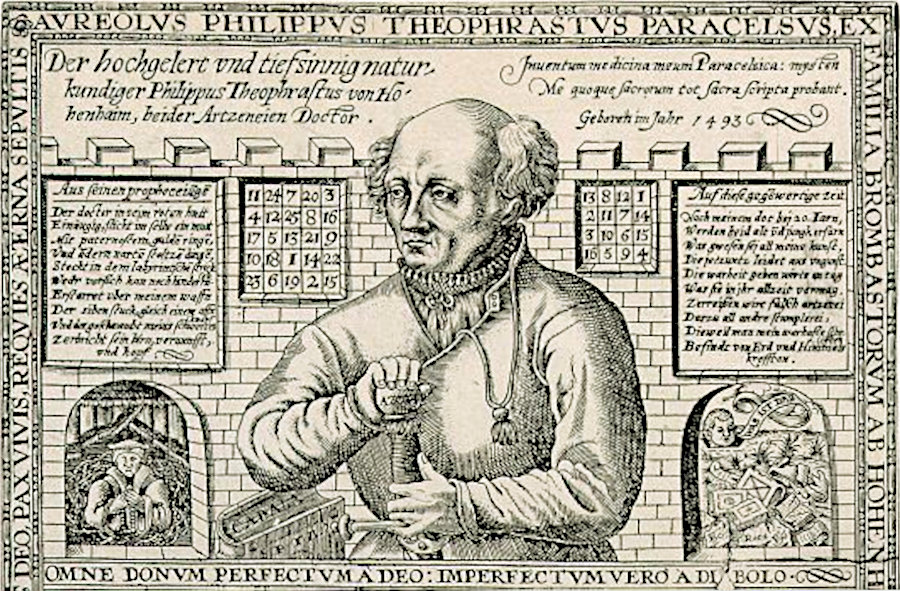
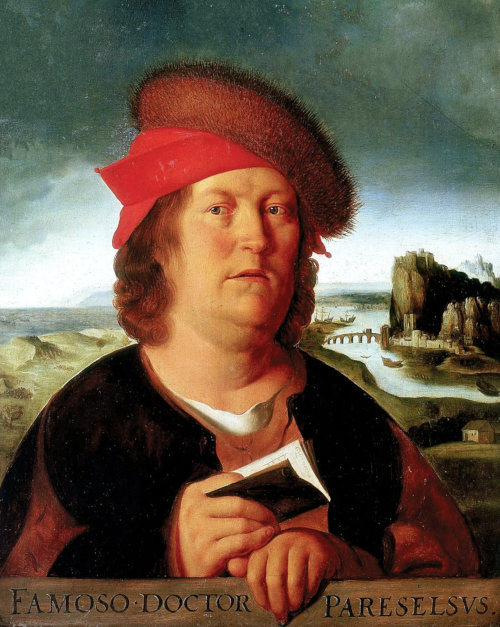 Paracelsus
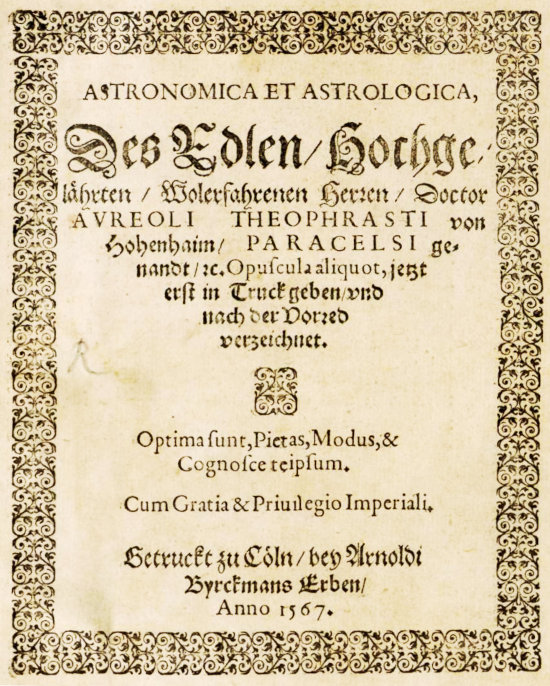 A book by Paracelsus about Astronomy and Astrology
Paracelsus
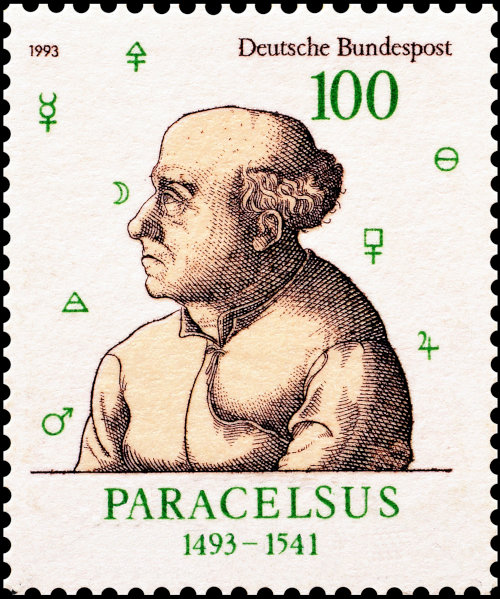
The Hermeticist, Physician, Alchemist, Astrologer, Philosopher, Medical Pioneer and Lay Theologian known as Paracelsus (c.1493–24.09.1541) was born in Egg an der Sihl, Switzerland as Philippus Aureolus Theophrastus Bombastus von Hohenheim. Just by looking at the sheer number of pioneering insights and practical implementations that turned into the science of modern medicine, it is ironic that a Hermeticist actually invented the very thing whose practitioners that denies the methods of his achievements.At the age of 16, Paracelsus started studying medicine at the University of Basel, later moving to Vienna. By 1516, he gained his medical doctorate from the University of Ferrara. Between 1517 and 1524, he embarked on a series of extensive travels around Europe. His wanderings led him from Italy to France, England, Holland, Germany, Spain, Portugal, Denmark, Sweden, Poland, Russia, Hungary, Croatia, Rhodes, Constantinople, and possibly even Egypt.
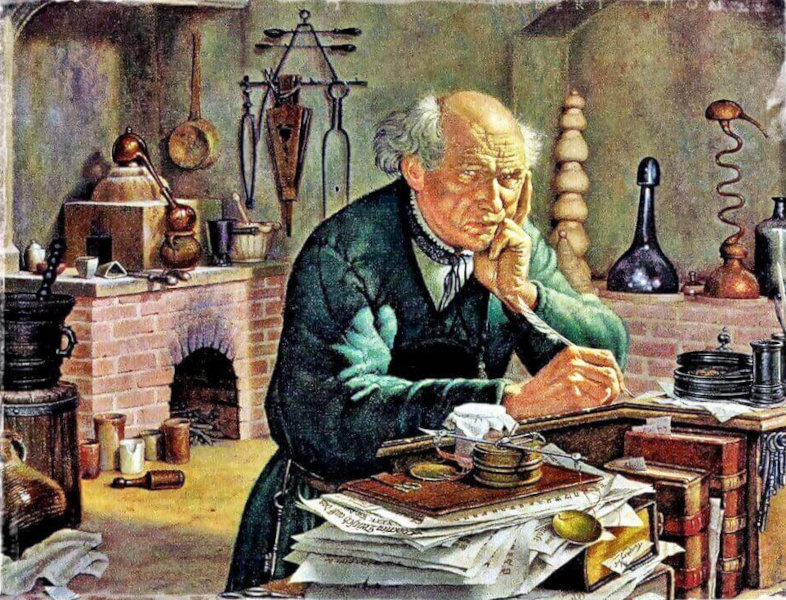
He once said "The richest of questions is half the medicine."
("Das reichte Fragen ist die halbe Medizin.)"
Among his many achievements, he is credited with being the "father of toxicology". He advocated cleanliness and protection from dirt and "external enemies" with regulation of diet, trusting to nature to effect the cure. "Every wound heals itself if it is only kept clean." He attributed disease to natural causes rather than to the mystical influence of devils or spirits. Paracelsus also maintained that every disease must have its remedy. He theorised that materials which are poisonous in large doses may be curative in small doses (a precursor to homeopathy). He also believed that fasting helped enable the body to heal itself. 'Fasting is the greatest remedy, the physician within.' and held that the body functioned like an alchemical lab.
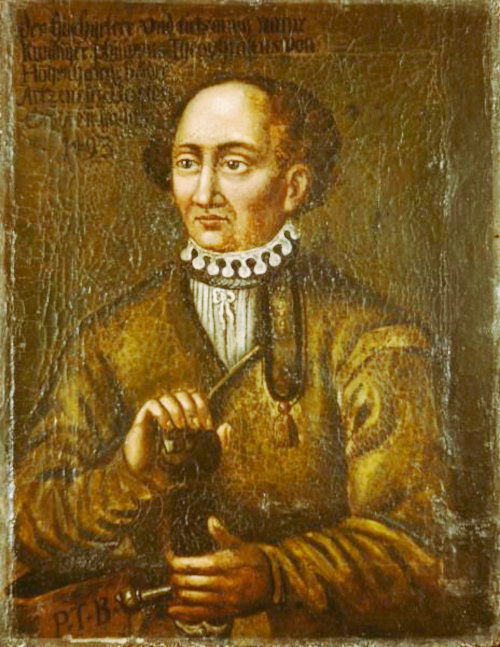
From studying the elements, Paracelsus developed the idea of a philosophical tria prima ('three primes') consisting of combustible sulphur, fluid and changeable mercury, and the solid and permanent salt. This was first mentioned in his work "Opus paramirum", about 1530. Paracelsus believed that the principles sulphur, mercury, and salt contained the poisons contributing to all diseases and also defined the human identity. Salt represented the body, mercury represented the spirit (imagination, moral judgement, and higher mental faculties), while sulphur represented the soul (the emotions and desires).
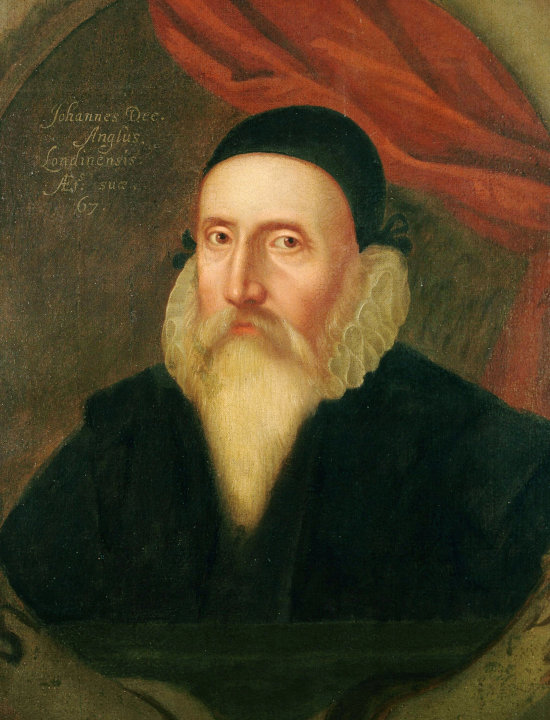 Doctor John Dee
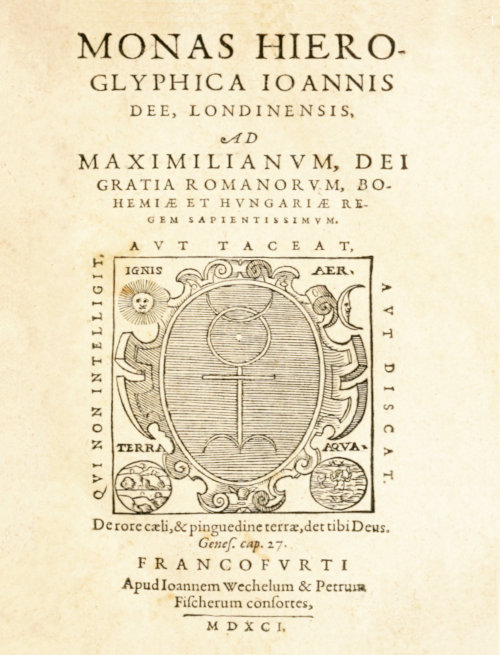 Dee's Book,
 Monas Hieroglyphica
John Dee
The English polymath, mathematician, astronomer, astrologer, alchemist, philosopher, occultist, magician, antiquarian, bibliophile, map-maker, apothecary, courtier, scholar and teacher, John Dee (13.10.1527–1608/1609) was, among other things, Court Astronomer for Queen Elizabeth I. In his position of political advisor, he advocated the foundation of English colonies in the New World to form a "British Empire", a term he is credited with coining.In 1555, Dee was arrested and charged with the crime of "calculating", because he had cast horoscopes of Queen Mary and Princess Elizabeth. Three years later when Elizabeth succeeded to the throne, Dee became her Astrological and Political Advisor. From the 1550s to the 1570s, he served as an her advisor for England's voyages of discovery.
In 1564, Dee wrote his Hermetic work Monas Hieroglyphica. Though not having studied or qualified to become a physician, Dee was fascinated by the subject and received an honorary doctorate in medicine from the University of Prague in 1584 or 1585. Dee owned many books on medical topics and was particularly interested in the physician, botanist and alchemist Paracelsus. Many books in Dee’s vast library were concerned over the accordance between medicine and astrology. Dee’s diaries record his own and his family’s health, and the treatments he administered.
In the autumn of 1578 Dee undertook a dangerous journey across Germany, travelling as far as the city of Frankfurt-an-der-Oder where he consulted the physician Leonhard Thurneisser (1530?–1596) to seek medical advice for the queen, whereby he wrote:
My very painfull and dangerous winter journey … was undertaken and performed to consult with the learned physitians and philosophers beyond the seas for her Majesties health-recovering and preserving.
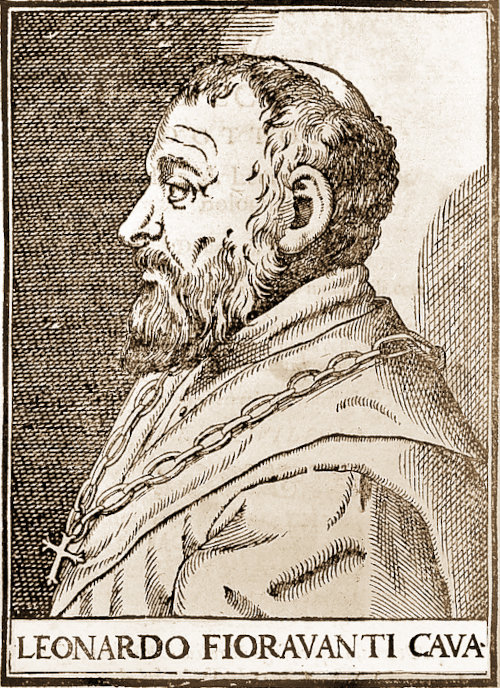 Leonardo Fioravanti
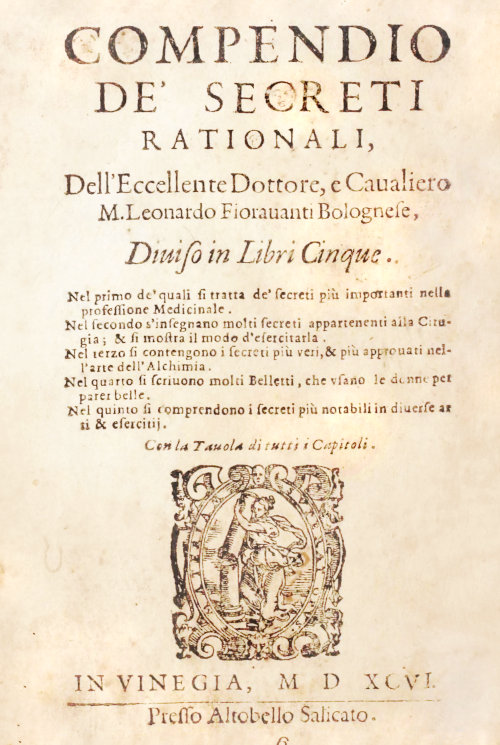
Leonardo Fioravanti
The alchemist, doctor, physician, surgeon, Leonardo Fioravanti (10.05.1517-1588). More infamous than famous, he was variously called a Charlatan, Poisoner, Reformer, Knight, Prophet, Miracle-Worker, Saviour, Alchemist, and Fraud. To top that, he even publihed a recipe for the otherwise mythical, Philosopher's Stone, with which he was accused of killing some of patients or clients, by administering it as a cure-all.As a man who could make as many enemies as friends, he was not only deeply admired and revered by his patients, he was reviled and abhored by mainstream medicos. Fioravanti turned his back on their university medicine which he claimed was destroying and hiding the real and effective cures, and took to the countryside. Here he claimed, at least in his autobiography, to discover folk remedies which he believed to be ancient and still intact, having remained in use by the simple folk, who were insulated from modern techniques of treatment. His opponents, he said, were only envious.
He remarked on a case in Messina:
'and then an old woman will come along, and with the rules of life and an enema will make the fever cease and with an ointment will make the pain go away and with a fomentation will make the patient sleep. […] And, in that case, the old woman will know more than the physician.'
Fioravanti started his professional life in Spain, where he was doctor to King Phillip II, who in turn elevated him into the nobility. After that he continued to work in Spanish ruled Sicily and Naples, and then onto Rome and Venice. In Palermo, he performed the first recorded splenectomy on Italian soil.
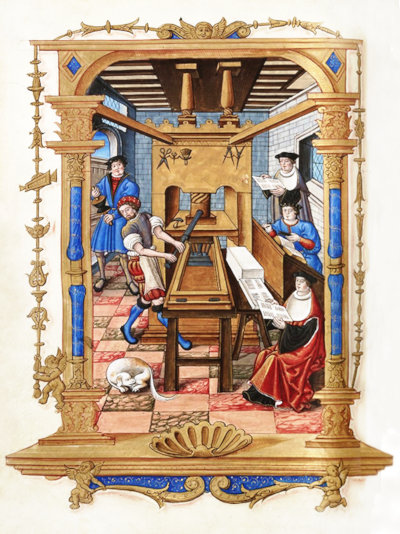 16th Century Printing Press
'The day may come in which we will all be doctors in a way [in the sense of learned]; for today I can see that many of us, even the women, speak of philosophy, medicine, astrology, mathematics and the many other sciences that there are, without being doctors. […] no one can be tricked, since anyone who wished to tire their brain a little can be learned; and the cause for this has been the printing press, which has so benefitted the world.
[…]
no one can be tricked, since anyone who wished to tire their brain a little can be learned; and the cause for this has been the printing press, which has so benefitted the world.’
Through the newly found possibilities of the printing press, Fioravanti worked at making himself "popular" by offering his audience his collections of folk recipes for treatments and cures. By writing in the vernacular rather than in Latin, and placing the knowledge in the mouths of simple folk such as herb women and midwives, he appealed to a new level of readers. As well as that he repackaged it all as country cures for urban readers who were now enjoying greater reading pleasure, and managed to broaden his audience even further.
He wanted everyone to have access to knowledge:
[…]
no one can be tricked, since anyone who wished to tire their brain a little can be learned; and the cause for this has been the printing press, which has so benefitted the world.’
‘…and that is why there should be many kinds of writers, since some write for high and exalted minds, some for the middling sort, and some for those who do not understand very much at all. So, if my work is not for intellectuals, nor even for those of middling quality, at least it will be for those who understand little. For they are the hungriest, and I want everyone to have some food for thought.’
Note: For much of this information, the author is indebted to the brilliant research by the Brazilian historian, Dr. Julia Martins and her U.K. Living History site and channel.
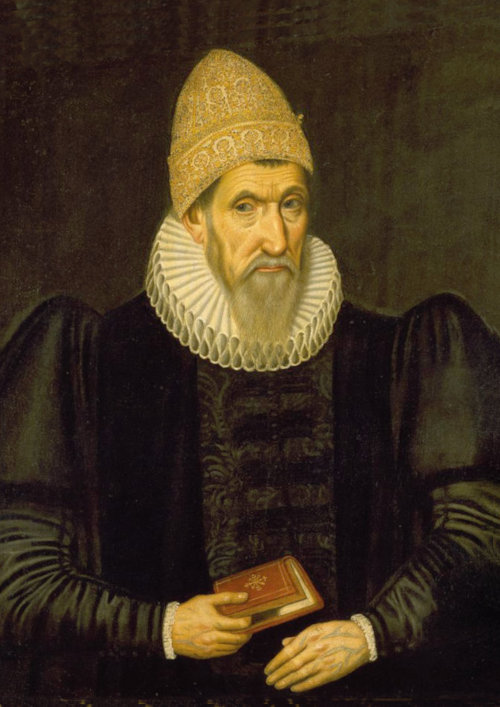 Medical Astrologer
 Richard Napier
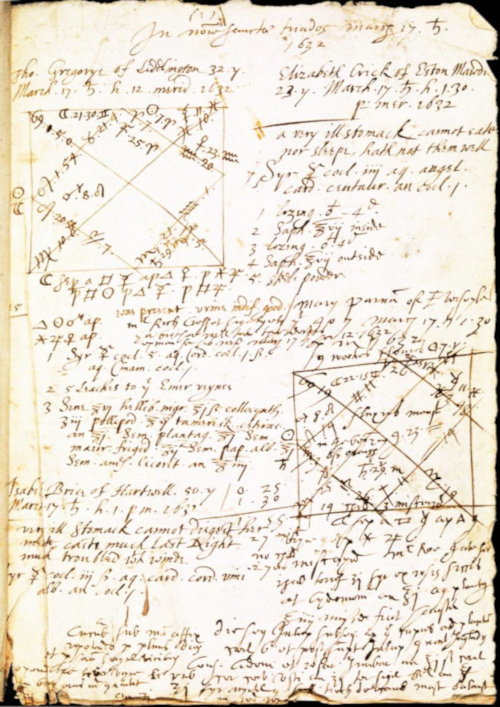 Richard Napier's
Case Book
Doctor Reveverend Sir Richard Napier
The prominent English astrologer and medical practitioner, The Reverend Richard Napier (04.05.1559–01.04.1634), who was also known as Dr. Richard Sandy, had studied under the astrologer Dr. Simon Forman (1552-1611), therewith inheriting his manuscripts. Napier's many papers were in turn inherited by the antiquarian and astrologer, Elias Ashmole (23.05.1617–18.05.1692) and are now in the Bodleian Library in Oxford. The famous Bodleian library was created by Ashmole to house his large collection which he donated.Napier's family descended directly from the Scottish Napiers, Lairds of Merchiston, his father being the elder son, by a third wife, of Sir Archibald Napier (d. 1522), fourth laird of Merchiston. Richard's sister was married to Sir Thomas Myddelton of Chirk Castle, the son of Sir Thomas Myddelton, Lord Mayor of London (who was also one of Napier's patients).
Having enjoyed a good education at Exeter, where Napier matriculated at the age of 18. He then continued at Oxford where he studied theology and earned his BA in 1584 and his MA in 1586. In 1590, he left Oxford, became ordained and was installed as rector of Great Linford in north Buckinghamshire, where he was to live and work for the next forty-four years until his death. Napier was a lifelong devout Anglican, claiming to have conversed regularly with the archangel Raphael, and is reputed to have prayed so much that he had callouses on his knees and even died while praying.
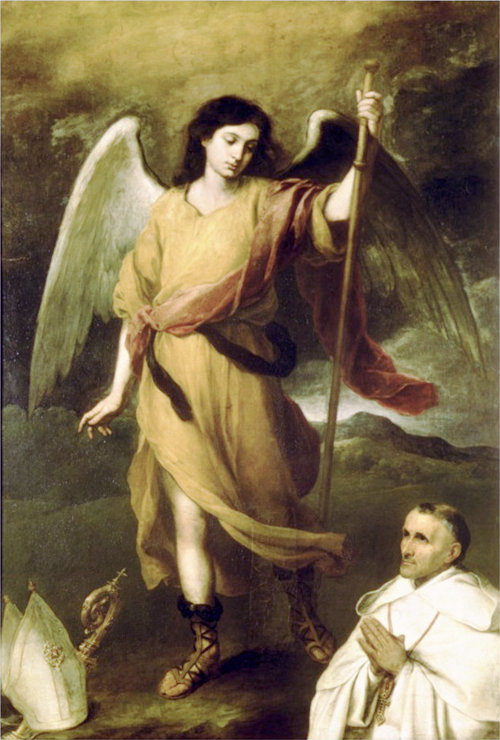 The Archangel Raphael
As a strange twist of fate, Napier met up with Simon Forman, a self-taught medical astrologer from a poor background and with a foreground bordering on notoriety. Both Forman and Napier personally knew John Dee and were heavily influenced by him. It was around 1597 that Napier began practicing as an astrological doctor, with his many patients (tens of thousands) not only being locals from Linford but also from far and wide.
Napier's extensive medical notes reveal that he administered a mixture of orthodox medicinal remedies, religio-moral counsel, and astrological, quasi-magical intervention from blood-letting and purgation, to mutual prayer, horoscope casting, the provision of amulets and charms, and ritual exorcism. Astrology informed Napier's entire practice, from the content and style of consultation and diagnosis to record-keeping and the timing and nature of treatments. He reportedly regularly called on the archangel Raphael for help in assisting the trickier cases of his patients.
Napier was knighted in 1611 and died in 1634, aged 74, passing his estate on to his nephew (the son of his brother Robert), who was also called Sir Richard Napier. Richard, the younger, had become his uncle's pupil and as part of the estate had inherited all of his uncle's books and papers. He lived in the old medieval manor house located in the grounds of Great Linford Manor Park.
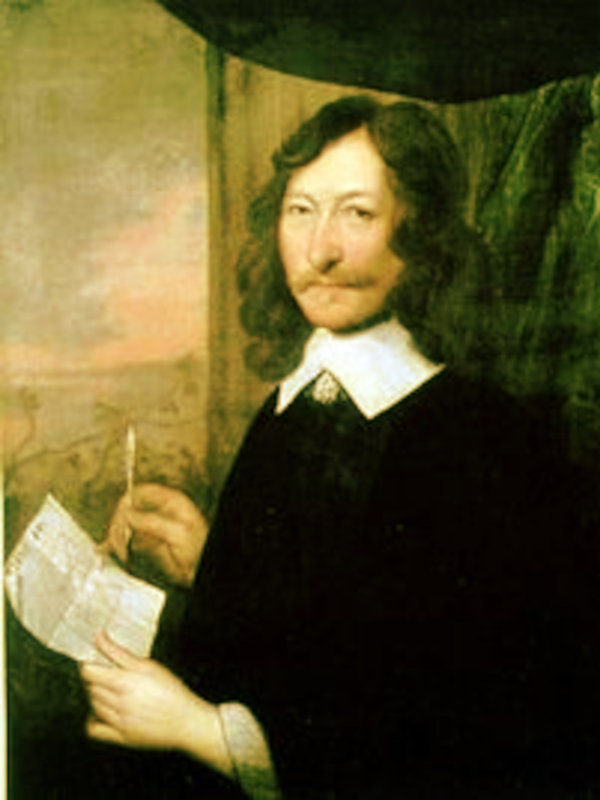 William Lilly,
 Astrologer, Physician
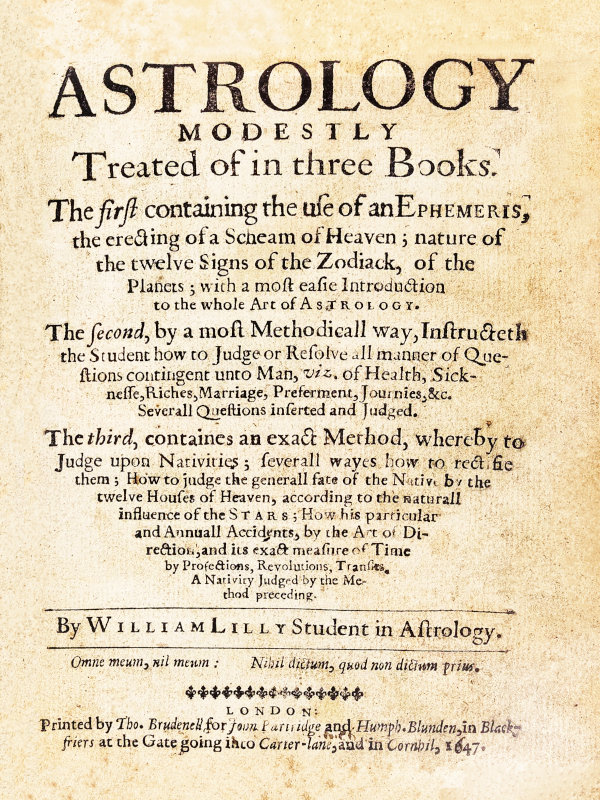 Lilly's Book,
 Christian Astrology
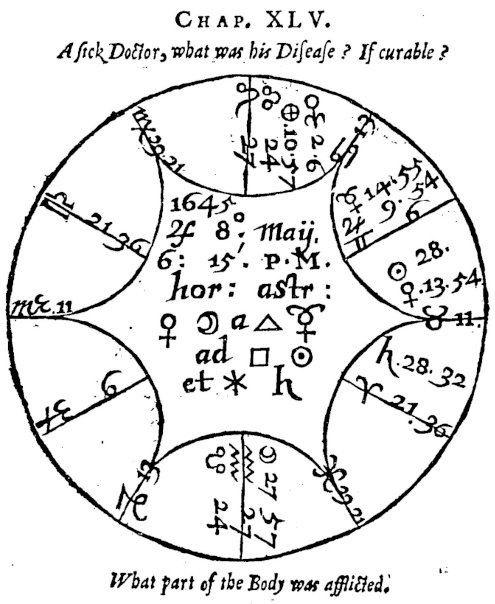 Lilly's chart for the decumbiture of a sick doctor
William Lilly
The Astrologer William Lilly (01.05.1602-09.06.1681) is undoubtedly the most famous English astrologer. His greatest claims to fame were that he predicted the great fire of London, fourteen years earlier and he authored the first astrological textbook, written purely in English, entitled "Christian Astrology". Being a contemporary of Nicholas Culpeper, the two indeed not only knew each other, they also wrote together.Both of these men had a mixed bag of fortunes due to their outspoken political persuasions. When on the right side politically, that being with the Catholics, they did well, but naturally enough ran into trouble when the tables turned, and the Protestants ruled. Both men also used astrologer in the judgement and treatment of diseases.
While Culpeper concentrated on medicine, Lilly on the other hand made his bread and butter mostly from horary astrology, answering questions from his clients. Although closely related to medical astrology, it wasn't solely concentrating on the health issues that had befallen Culpeper's clientele.
Nevertheless, in his writing, Lilly describes in great detail how to draw up and interpret astrological charts related to sickness, namely the chart for the decumbiture, the time when the sick person took to bed. For example, regarding the chart shown here on the right, for "a sick doctor", here's what Lilly said:
The Signe ascending in the Question is Scorpio, the Chelae notable fixed Stars neer the Ascendant, yet it is not afflicted by the evill position or presence of any evill Planet; therefore I must next look to the 6th house, and see if it be afflicted, wherein I find Saturn in his Fall, who thereby afflicts that house, which naturally signifies Diseases by his unlucky presence; from whence I concluded, that from thence
and from that house I must require the part or member of the Body afflicted or most grieved, as you may read page 244.
Aries represents the Head, as you may see page 245.
Saturn in Aries signifies the Brest, as page 112.
Mars Lord of the Ascendant in Leo doth signifie the Heart.
The Lord of the Ascendant is Mars, and him you find but lately separated from a Square Dexter of Saturn, both of them in Cardinall Signes, Mars at time of the Square in Cancer, which presents the Brest and Stomack: from hence I positively concluded, as to the parts of Body grieved, they were the Head, Brest, Heart and Stomack, and that there lodged in the Brest or Stomack some melanchollick Obstruction, the cause of all his disease and Misery.
From what Cause the Sicknesse was.
Saturn being principall Significator of the Infirmity, in his owne Termes, and the Moon in his house applying unto him, did prenote Melancholly, and such dry Diseases as are occasioned from melancholly distempers, and might abide in the Head and Brest: what Infirmities Saturn naturally signifieth, see page 244. how to make a right mixture, your Physicians best know, and what Diseases man may be subject unto in those parts, and may proceed from such causes as abovesaid.
Mars Lord of the Ascendant was also in the Termes of Saturn, and the Moon out of his Termes, applyed to a Square of Sun, and he in Mars his Termes; so that Choller was a secondary cause of this Doctor’s sicknesse; and indeed when I came to speak with him, he was afflicted with great paine and rumbling in his head, very silent, dull and melancholy, slept very little, had a very dry Cough, and complained of great weaknesse and paine in his Brest, and at the Heart; his Complexion was betwixt black and yellow, as if there was inclination to the Jaundies; he had besides these, a lingering Consumption and great wearinesse all over him, and in every joynt, for the Moon is in an ayery Signe; and as Scorpio doth ascend, which signifies the Secrets, Stone in the Bladder; so doth also the Moon in Aquarius signifie the Secrets and Diseases therein, &c. so had he difficulty in making Urine, voyded red gravell, and was greatly pained in those parts, etc. Having my selfe little judgment in Physick, I advised him to perscribe for himselfe such Physicall Medicines as were gently hot, moyst and cordiall, whereby he might for a while prolong his life; for the Moon in the 4th in Sextile with Saturn, argues sicknesse until death: He dyed the fourteenth of August following..
Whether the Disease would be long or short?
Saturn being author of the Disease, shewed it would be permanent, or of some continuance, as page 248. for he is a ponderous, slow Planet: besides, the Angles of the Figure are all fixed, the Moon and Sun both in fixed Signes, and in Square, out of Angles, both in the Termes of an Infortunate; Mars Lord of the Ascendant and 6th in a Fixed Signe; all these portend the longitude of the Disease: Besides, the Antiscion of Mars falls neer the Sun, and thereby afflicteth him, being the Luminary of the time.
Aries represents the Head, as you may see page 245.
Saturn in Aries signifies the Brest, as page 112.
Mars Lord of the Ascendant in Leo doth signifie the Heart.
The Lord of the Ascendant is Mars, and him you find but lately separated from a Square Dexter of Saturn, both of them in Cardinall Signes, Mars at time of the Square in Cancer, which presents the Brest and Stomack: from hence I positively concluded, as to the parts of Body grieved, they were the Head, Brest, Heart and Stomack, and that there lodged in the Brest or Stomack some melanchollick Obstruction, the cause of all his disease and Misery.
From what Cause the Sicknesse was.
Saturn being principall Significator of the Infirmity, in his owne Termes, and the Moon in his house applying unto him, did prenote Melancholly, and such dry Diseases as are occasioned from melancholly distempers, and might abide in the Head and Brest: what Infirmities Saturn naturally signifieth, see page 244. how to make a right mixture, your Physicians best know, and what Diseases man may be subject unto in those parts, and may proceed from such causes as abovesaid.
Mars Lord of the Ascendant was also in the Termes of Saturn, and the Moon out of his Termes, applyed to a Square of Sun, and he in Mars his Termes; so that Choller was a secondary cause of this Doctor’s sicknesse; and indeed when I came to speak with him, he was afflicted with great paine and rumbling in his head, very silent, dull and melancholy, slept very little, had a very dry Cough, and complained of great weaknesse and paine in his Brest, and at the Heart; his Complexion was betwixt black and yellow, as if there was inclination to the Jaundies; he had besides these, a lingering Consumption and great wearinesse all over him, and in every joynt, for the Moon is in an ayery Signe; and as Scorpio doth ascend, which signifies the Secrets, Stone in the Bladder; so doth also the Moon in Aquarius signifie the Secrets and Diseases therein, &c. so had he difficulty in making Urine, voyded red gravell, and was greatly pained in those parts, etc. Having my selfe little judgment in Physick, I advised him to perscribe for himselfe such Physicall Medicines as were gently hot, moyst and cordiall, whereby he might for a while prolong his life; for the Moon in the 4th in Sextile with Saturn, argues sicknesse until death: He dyed the fourteenth of August following..
Whether the Disease would be long or short?
Saturn being author of the Disease, shewed it would be permanent, or of some continuance, as page 248. for he is a ponderous, slow Planet: besides, the Angles of the Figure are all fixed, the Moon and Sun both in fixed Signes, and in Square, out of Angles, both in the Termes of an Infortunate; Mars Lord of the Ascendant and 6th in a Fixed Signe; all these portend the longitude of the Disease: Besides, the Antiscion of Mars falls neer the Sun, and thereby afflicteth him, being the Luminary of the time.
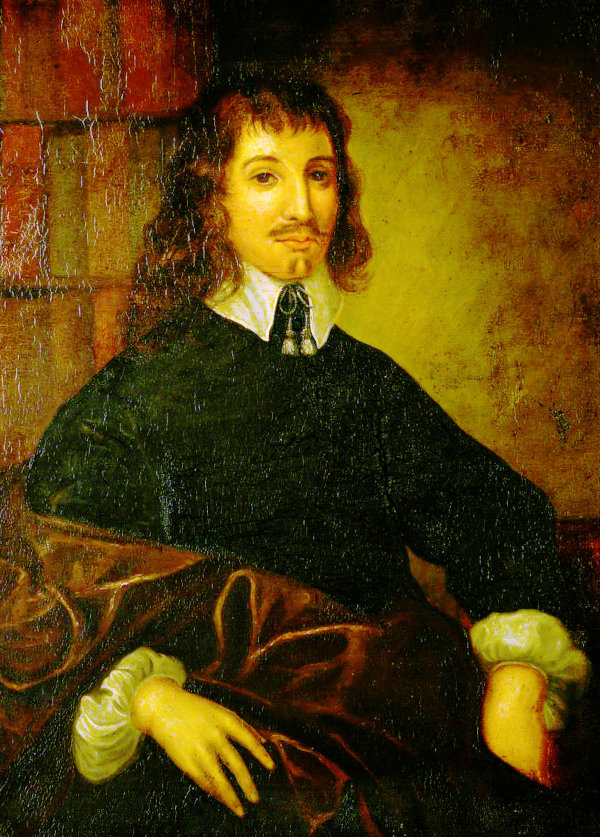 Nicholas Culpeper, Astrologer, Physician
 One of Culpeper's Books on Astrological Medicine
An Old Advertisement for a Book by Culpeper:
Culpepers Semiotica, or his Astrological Judgement of Diseases, much enlarged from the discumbiture of the sick, which way to finde out the cause; change; and end of the Disease. Also whether the sick be likely to live or die : with the signs of life and death by the body of the sick party, according to the Judgememt of Hippocrates. With a Treatise of Urines, by N.Culp.
Nicholas Culpeper
The English herbalist, botanist, physician and astrologer, Nicholas Culpeper (18.10.1616–10.01.1654) authored the well known popular books The English Physitian (1652, later renamed Complete Herbal, 1653), Astrological Judgement of Diseases from the Decumbiture of the Sick (1655) and many others. These books were not only in print for many years, some are still available in recent editions.Nicholas Culpeper was the son of Nicholas Culpeper (senior) who died shortly before his son's birth. As a result, his mother moved, with him, to her father's residence in Isfield, Sussex. Culpeper was greatly influenced by his upbringing there, especially by his grandfather's political and religious beliefs and being taught by him both Latin and Greek. Alongside that, his grandmother familiarised him with medicinal plants and herbs in the countryside, which became his lifelong pursuit.
At 16 he took up study at Cambridge University, and afterwards an apprenticeship to the apothecary, Daniel White of Temple Bar in London. When he was 24 he married Alice Field, the 15 year old heiress of a wealthy grain merchant, which provided him with the opportunity to set up his own pharmacy in Spitalfields in London. He thereby obtained his supplies from the countryside and provided his services free of charge as a reaction to the exorbitant charges by the physicians in London. By combining this with his knowledge of astrology he was able to treat up to 40 patients a day.
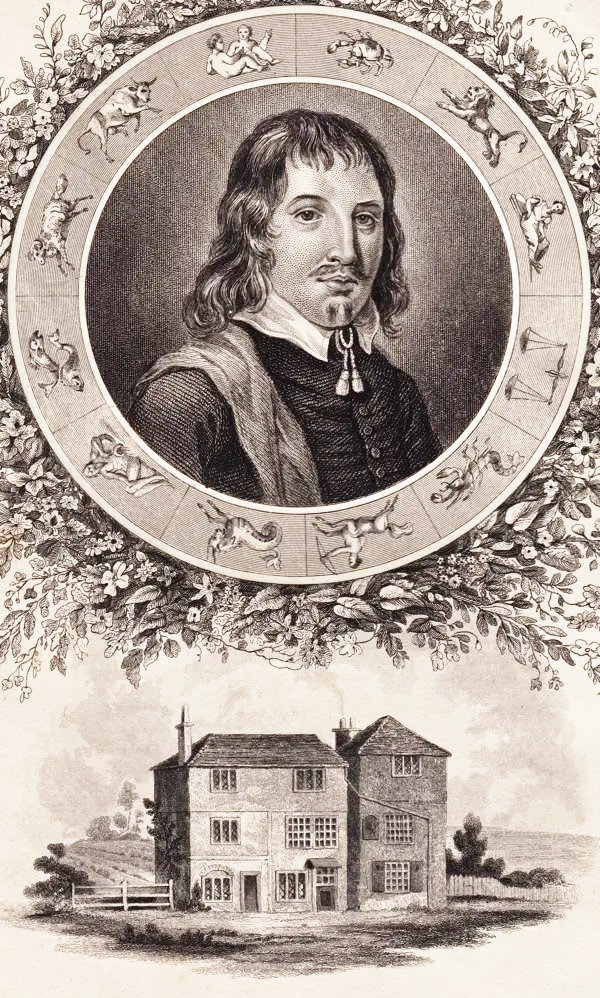 Another portrait of Culpeper including a picture of his house in Spitalfields where he treated his patients, mostly without charge.
"Three kinds of people mainly disease the people – priests, physicians and lawyers – priests disease matters belonging to their souls, physicians disease matters belonging to their bodies, and lawyers disease matters belonging to their estate."
In August of 1643, Culpeper had joined the Parliamentarians who requested that he would be field surgeon at the Battle of Newbury. Consequently, he carried out surgery at the battle field until receiving a shot in the chest causing a serious wound, upon which he returned to London. After 11 years of suffering, having not fully recovered from his injuries caused by the musket-shot wound to his chest, Culpeper died from Tuberculosis at the age of just 37 in Spitalfields. Two years later, his wife Alice, married the astrologer John Heydon.
| Some Publications by Nicholas Culpeper: | |
| 1649 | A Physical Directory, or a Translation of the London Director (translation of the Pharmacopoeia Londonesis of the Royal College of Physicians) |
| 1651 | Directory for Midwives or A Guide for Women in their Conception, Bearing, and Suckling their Children |
| 1651 | Semeiotica Uranica, or An Astrological Judgement of Diseases |
| 1652 | Catastrophe Magnatum or The Fall of Monarchy |
| 1652 | The English Physitian or An Astrologo-Physical Discourse of the Vulgar Herbs of this Nation (later, Complete Herbal) |
| 1655 | Astrological Judgement of Diseases from the Decumbiture of the Sick |
| 1655 | An ephemeris for the year 1655, being the third after leap-year together with astrological predictions, and monthly observations |
| 1685 | Culpeper's last legacy left and bequeathed to his dearest wife for the publick good: being the choicest and most profitable of those secrets which while he lived were locked up in his breast and resolved never to be published till after his death |
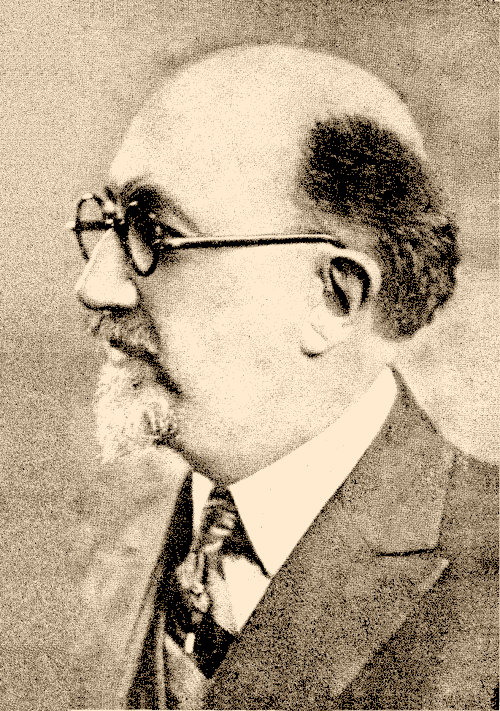 Howard Leslie Cornell
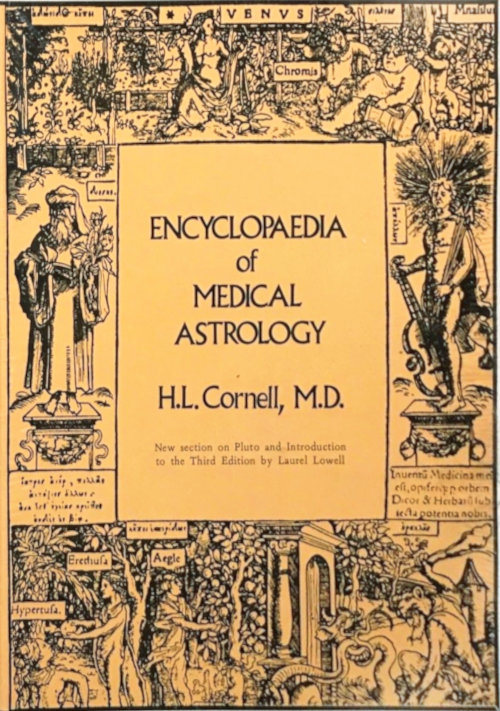 Cornell's Encyclopedia
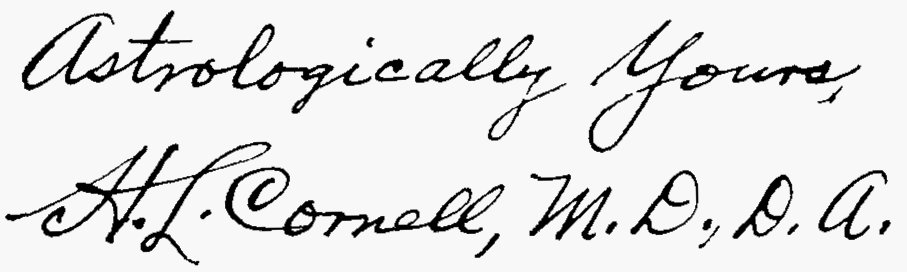
Dr. Howard Leslie Cornell
Howard Leslie Cornell, M.D., (23.07.1872-1938) was a naturopathic physician with practices in the U.S. and India. In 1918 he set about compiling all the medical references in his many astrology books. It became a momentous task and the work eventually came to comprise two enormous volumes entitled Encyclopedia Of Medical Astrology. The result of 15 years' work is this one-of-a-kind text, which was first published in 1933. It has been widely sought-after ever since and remains the one indispensable medical astrology book in existence.In this work, Dr. Cornell vastly expanded on the astrological medical correspondences providing the reader all the benefits of his years' long research and application of medical astrology included in his own medical practice. Not only are further anatomical references made but also those of ailments and diseases plus much more.
The encyclopedia stands alone as the best, most thorough text on medical astrology ever written. The product of nearly two decades of careful study and experimentation, the Encyclopaedia of Medical Astrology is the only book ever to comprehensively compile the research carried out by generations of doctors, healers, occultists, and astrologers.
Expertly prepared by the brilliant and esteemed Dr. Howard Leslie Cornell, the book explains how to use natal charts and horoscopes to pinpoint the underlying medical conditions that give rise to any symptoms presenting in a patient. A diagnostic tool of unparalleled depth and precision, the Encyclopaedia of Medical Astrology excels at linking symptoms to their astrological sources. His book is the key to unlocking the secrets and immense wisdom of medieval medicine. The library of any healer or astrologer would be woefully incomplete without this remarkable text.
About
Hi, my name is Rod Schneider and I have created this website to illustrate how, with the help of astrology, that negativity can be converted into something more positive. The astrology being shown here is rooted in the most ancient inceptions derived from Hermetism. It is technical but in the hands of a practitioner already familiar with astrology has great potential to be helpful. There is also much help for non-astrologers to use astrology in a different manner, namely with cycles and phases.Comments and contributions are always welcome.
Contact: rodschneider35@gmail.com